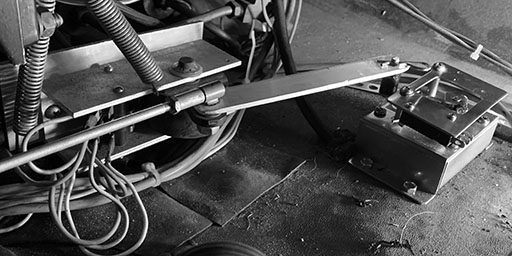
Now that I’m using a GPS speedometer, the existing speedometer cable is no longer needed. The cable was entering the floor next to where the new throttle was installed, and I was fairly concerned that it could get caught up on the arm. It also clears up the mess of wires behind the dashboard a bit.
Speedometer cable entering car through floor next to throttle pot box
There was a bunch of black rubbery caulk where it entered through the floor. Once the caulk was removed, I saw that the throttle I installed covered part of the opening. It was difficult with the room remaining – but after working with it, I was able to pull the end with the bolt out.
The next part was pulling the cable off of the underside of the car. It was threaded above the brake lines and emergency break. Once I got most of it pulled through and hanging out of the front of the car, the next step was to remove the other end.
I was able to unbolt the speedometer cable by reaching down into the battery compartment. It was a tight area trying to get a good grip with some pliers, but it was easier than pulling the bolt through the floor.
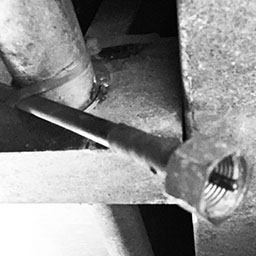
Speedometer cable zip tied to underside of CitiCar frame
I thought I was home free as the wire started sliding freely under the carriage until I hit a snag. It was in a tight spot that I couldn’t see. I got out my phone and looked around. A zip-tie was holding it against the frame. After confirming that no other wires were being held in place, I jacked up the car enough that I could reach up with some tin-snips and cut the zip tie.
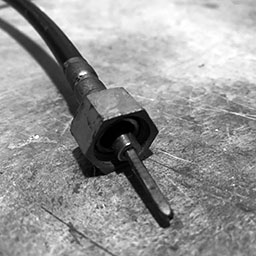
The cable is fairly sturdy and doesn’t like bending much. It was holding its shape pretty well after being removed from the car. Each end has a metal shaft that spins to indicate how fast the motor is spinning. It may seem like a simple task, but its another step forward. Progress.
In other news
I took my SUV into a car dealership. I’ve had two people “fix” it already, and it feels like I’m losing money on temporary fixes. The professionals took a look at it. Although only a fastener on the transmission was broken, I was told that the shifter cable needed to be replaced as well since it’s more of a combination of the cable and fastener.
The parts will be in tomorrow morning. I had the option to bring it home, but I was told that the vehicle broke again as they parked it. I felt lucky that I was able to get it to the dealership, and wasn’t about to tempt fate again driving it home and back. The walk home was about three miles. I sense another long walk in my immediate future.
The walk home had me thinking of what options I may have to haul the CiitCar on a small trailer, that the CitiCar could haul on its own. It would have to be very lightweight and support the CitiCars weight. It would give me the option of hauling it to a destination where the towing vehicle can be dropped off. Both of my primary vehicles have a hitch. I would need to determine where I could install a hitch on the CitiCar.
Another thing to look into is if the trailer could serve as some kind of car jack that would make it easier for me to get underneath of the car to make upgrades and repairs. Of course, I would have to stabilize the trailer – but it would seam to be a safer way to jack it up, and to a higher level.
I awoke to the sound of construction in my quiet little subdivision. I peered out the window and saw road paving equipment. My mind was racing in determining how to move my vehicles off the road. Upon further investigation, I soon realized the construction crew was digging holes in the middle of the road for the fiber optic installation and patching them over. Crisis averted.
On my lunch break, I picked up a battery for my car. Teddy and I came back home with 8.5 miles on the trip odometer. I decided to zip around the neighborhood and bump the trip past 10 miles. The roads in the neighborhood were more bumpier than I had thought. I think Teddy had just as much fun as me, sticking his head out the window.
We made it home with a new record of 10.2 miles for the trip, and the lowest battery voltage recorded at 47.1 volts. The car was still driving just fine without showing signs of slowing down.
I later installed the new car battery into my other car and was able to move it to the driveway. As for the SUV, I contacted a local dealership, inquiring about repairs. I’ve had two people give it a temporary fix, and I need something more permanent.
Throttle Installation
I finished installing the new throttle tonight. Most of the delays were associated with trying to figure out how to put the throttle in the car, fabricating parts, and waiting for parts to arrive.
Tonight I assembled an aluminium bar with a clevis pin and a cotter pin. I used spacers to elevate it. I divided one of the spacers in half so that I could fit them both in between the aluminum rod and the throttles arm. Bolting the throttle to the floor was a bit difficult due to the awkward position of trying to drill while the hood (or lack there of) was in the way.
In Other News
I’ve decided to go ahead and get the Lester Summit Series II charger. I was set on it before it was recommended that I get the Schauer charger I have now. The Lester charger has a few things over the Schauer charger:
QD Lockout
Ability to change battery profiles
Bluetooth
Waterproof
Dropproof
I’ll be able to use it with the four 12 volt sealed lead acid batteries as 48 volts. I believe I can also use it with the lithium batteries as well. The BMS modules are setup to be compatible with other chargers as well.
A few things are moving forward with the car. I’ve been taking little trips to parks around town fairly often.
Traffic Light Sensor
On my way to Chimney Field park, I was stranded at the light. The light cycled through its traffic pattern eleven times before it turned green for me during fairly busy traffic. I’m under the impression that the CitiCars aluminum frame isn’t able to trip traffic light induction sensors in the pavement. Someone mentioned in the C-Car forums that motorcyclists with this problem will get strong earth magnets to attach to the bottom of the frame.
Pot Box
I took a look at what I had to work with to find an appropriate spot to place the pot box. I prefer to keep the existing throttle switch so that I can swap between and original 3 speed and new gradual controlled driving styles.
Looking around, I found it difficult to find a spot to bolt the pot box. The floor is made of plastic, and even if I removed the original speed switch, I’m uncertain where I could bolt the pot box. I have an idea of using a bicycle cable for brakes/gear shifting so that I can put the pot box anywhere, but the cable itself still needs a place to secure it.
Charge Controller
I unbolted the charge controller, disconnected all the wires, and removed it from the car. The thing is heavy, weighing in at 26.8 pounds. Inside is a giant winding of copper and a little circuit board with an interlock switch to prevent the motor from operating when charging.
Original On-Board charge controller
On the back, I saw the previous owners name, company, address and a note:
Please Fix Low Voltage about 36v Book says should be 57½v
It’s comforting to know it wasn’t just me having a hard time getting the charger to work properly.
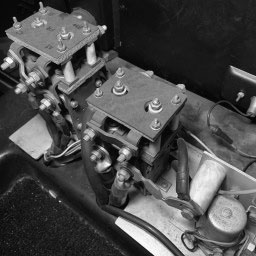
I had a bit of trouble determining how to wire the car back up to operate without it. Once I figured out what wires connect where, I crimped some spade terminals that fit very loosely into two of the original female connectors.
The CitiCar cabin light shining bright
One unintentional side effect is that my cabin light now works. Apparently it wasn’t hooked up to the charge controller properly. The connector looks a bit… melted or deteriorated.
Eastham Park
My primary usage of the car it to take Teddy for walks at various parks and events around town. My ultimate goal was to make it to Eastham Park because it has a Dog Park. The Royal Shenandoah Greenway runs through the park along the South Fork Shenandoah River. Not only is it far compared to my limited range, but there is a long and large hill to go back up a half mile on the way home.
Either due to my weight loss, driving style, 24/7 battery floating charge, “breaking in” the batteries, or a combination there of, the cars range appears to be improving. I decided that since I had free time this weekend, I’d give it a go and push the car to its limit.
Eastham Park trail under railroad tracks
It’s been a misty day with light rain at times. My shoes got fairly wet. There weren’t many people out, so Teddy had the whole dog park to himself. We also walked up to the end of the path at the high school before heading back. I let Teddy walk around in the South Fork Shenandoah river as well. On the way back, I could see people walking around and peering inside the CitiCar.
Loss of Power
The last part of the trip home today was an adventure in itself. As I made a hard left at a traffic light, the two loose spade terminals disconnected. The main contactor switch disengaged, and I lost power to the motor and lights – including the hazard lights. Fortunately I was in the slow lane, rarely used, highly visible, and pulled as close to the rail as I could before the car stopped.
I leaned over, connected the spade terminals, and was back on my way. I rewired a more secure connection after I arrived home. Eventually I need to rewire the whole car.
Although I’m going to upgrade the car to have a DC-2-DC system on board for my 12 volt power supply, I’m also considering using the small 12v battery I have now as a fail-safe backup for the hazard lights, signals lights, and flash relay. I feel that out of everything else on the car, I absolutely need the lights to signal that I’m having a problem if power is lost.
Longest Trip
I made it home without any other issues. This felt like one of the longest trips I’ve been on. The GPS speedometer is accurate compared to my prior one, so the trips appear shorter compared to prior trips. My old speedometer often registered 4 miles faster than my actual speed.
My trips to the town square are 0.8 miles less with the new speedometer (8.7 miles is now 6.9 miles). In all, my trip via GPS was only 8.6 miles, but I suspect the original speedometer would have registered just under 10 miles for the maximum distance on one charge. I arrived home with 48.3 volts at 54% charge.
Teddy and I zipped on down in the CitiCar over to the Gertrude Miller community park. It was a nice day out and we spent quite a bit of time walking around the park, laying down next to Happy Creek and taking in the sound of the water, the wind in the trees, and birds chirping about.
“Get your art on” written on main street
Next we headed over to the town square. There was an art walk going on where people had setup crafts such as ceramics, antiques, and painting. Two of the tents looked like the artists did spray painting fairly quick with various techniques to make a complex painting in front of your eyes as entertainment for crowds.
Custard on a warm summer day
To beat the heat, we walked along Happy Creek. I let Teddy swim in the river for a little bit. We continued up to B & L Custard. This time I tried the strawberry sauce over custard in a waffle bowl along with whip cream and a cherry on top. Teddy was happy with just a plain pup cup.
CitiCar Maintenance
Window lock on a CitiCar
Arriving home, I loosened up the window locks. I used a Philips head screw driver on the exterior screw along with a 3/8 ratchet on the nut on the other side of the window.
In other news
An unsealed envelop delivered to my door
Two packages arrived in the mail, but one was empty. I tried to request a replacement through the website, but I was being asked to send the original back, or I’d have to pay for it. A phone call to the vendor let me square things up. A replacement is being sent to me.
My Kalimba also arrived in one of them. I’ll be practicing with it while Teddy and I visit the parks.
Listen to me play a kalimba thumb piano
Each package was also supposed to have a different 3-way 12 volt adapter. The better one of the two arrived just fine.
Variety of hot chili peppers
Habanero peppers starting to ripen
My chili peppers are ripening. One of the Habanero peppers started turning orange. These are the hottest peppers that I’ve grown this year, and most of the plants had died off.
I reached out for help regarding battery cables with other d-car owners and enthusiasts. Along with the advice that I got, one of the locals that I met in the CitiCars maiden voyage was willing to help out with supplies and tools leftover from his EV conversion project. Teddy and I hopped into our little car and zipped downtown to the town square.
We met up and with more understanding of the parts of an EV, I was able to have a more knowledgeable conversation this time and had a lot of questions to ask regarding his setup. learning a bit more about how the guy upgraded his pickup truck. I paid more attention to his setup and had my eye on his use of project boxes to keep things segregated, organized and protected. He had quite a bit of advice when I asked about wiring harnesses and thoughts regarding a themed car that could be easily reverted without damaging the body. His thoughts were to look into Plasti Dip and a brand for “Painless wiring” for quality cables/connections where cables are labeled and easy to install.
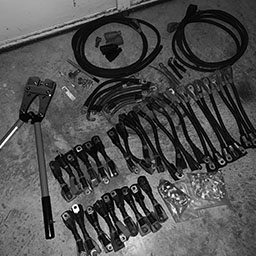
He had a large box of thick battery cables and two bags of battery lugs. The box was heavier than I had thought and caught me off guard for a moment. Along with the box of cables, I was able to borrow some wire cutters and a gigantic crimping tool. I opened the CitiCars back window and we stuck everything in with plenty of room to spare. Unfortunately, I forgot to grab the wire cutters…
Teddy grows some wings
Teddy and I enjoyed the park and took a stroll down main street. We went through Inklings, posed in front of a mural, and grabbed some ice cream from C & C Frozen Treats. Teddy had some mango while I ordered a quart of brownie ice cream.
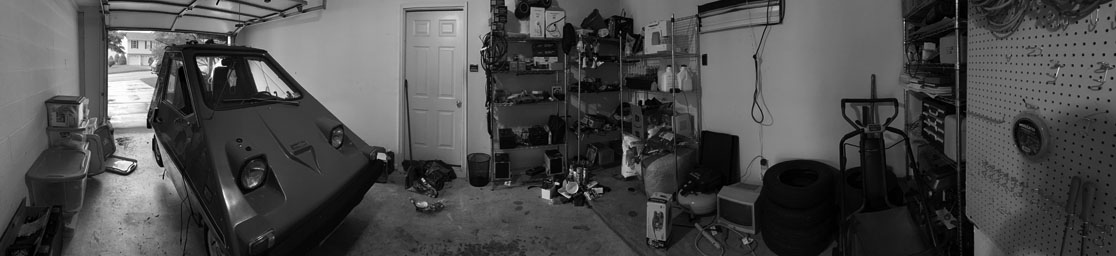
Teddy, Lewie, and The Chez CitiCar
By time we left, it looked like a bunch of antique cars were arriving into the town square for a little car show. I had to bail before the rain came. I didn’t make it home in time, and the rain was coming down pretty hard. I kept the wiper on the lowest setting and didn’t run into any problems blowing a fuse this time.
Running 120 volt AC via J1772
The replacement Level 1 & 2 electric vehicle supply equipment (EVSE) arrived today. I verified that it was operational and setup the CitiCar to charge it’s batteries through a J1772 port. I don’t know if the folks at Sebring-Vanguard had ever imagined such a thing, but I am now able to recharge the car at a public charger. Here is the setup in order from the wall to my cars batteries in my little experiment:
120 volt (5-15) outlet in wall
Level 1 & 2 EVSE (5-15 & 6-20)
EV Charger Power Converter (from J1772 to 120v & 240v)
Power strip
Five 12 volt battery chargers
Four deep cycle batteries for the motor and one small accessory battery
Displaying how I’m charging lead acid batteries with power supplied via J1772
I was loosing a tenth of an amp with the EVSE and power converter. To add more fun to the experiment, I decided to let the car charge to full capacity through the J1772 setup and see how much the total energy is affected.
Cable Inventory
Battery cables
Later in the night I started going through the battery cables I received to get an idea of what I had. The cables can be called either 00, double zero, 2/0 and pronounced as “two aught”.
I started taking inventory, measuring inches from the center hole of each lug.
Length
Quantity
Length
Quantity
5½
1
9½
1
6
7
10¾
1
6¼
4
13¼
1
6½
2
13½
1
7
1
13¾
4
7¼
1
14
2
7½
1
14¼
4
9¼
1
14¾
1
Cables with flat lugs at each end
Some cables also had a 90 degree lug at one end, but the shorter ones didn’t have a lug at all on the opposite end.
Missing Lug
Two Lugs
5
7½
4
9¼
3
12
12¾
13½
Cables where one end has a 90 degree lug
Two long cables were included that were 13 feet, eight inches, and another at fourteen feet, 11 inches. The longer cable didn’t have a lug on one of the ends.
There are quite a few good cables that I can use. The longer cables alone may be enough on their own. Many of the smaller pieces can be used for jumps between switches, fuses, controllers, and such.
Battery cable connected to two Chevy Volt battery modules
I found that I could barely use the 10¾” cable to connect two Chevy Volt battery modules next to each other. I have four cables that are 13¾, and four more at 14¼ that I could use with more slack between the batteries. It’s preferable to have a shorter length to reduce voltage drops. Although with the length of this circuit, the drop would already be fairly minimal.
Corroded lug
Wire brushed lug
I spent some time cleaning up one of the most corrosive lugs. I first tried to do it by hand with a wire brush with some progress. I then grabbed my angle grinder with a wire brush attachment and cleaned it up fast. I was finding that I was chasing some of the corrosion down under the heat shrink around the lug.
Things are coming along great. I have many cables that I can clean up and use once the motor arrives. I have the supplies necessary to make my own custom length of cables as well.
Tiny Radio
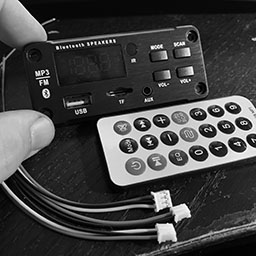
One of my tiny car radio modules came in the mail today. I actually ordered three different kinds because it was difficult to judge how big they were. This three dollar radio was originally just for a side project to stick on a repurposed 8-track tape. The idea was to give my 8-Track radio some modern features to play music from a blue tooth device as well as micro SD cards.
Bluetooth MP3/WMA decoder USB/Micro SD/Aux FM radio module
I was originally set on installing an 8-Track radio and an Android media entertainment center for navigation in the CitiCar. I’m having a difficult time determining where I should put them. I don’t have much space available on the dashboard to mount things, or the support to mount anything with some weight. I’m considering using one of the little radio modules instead.
I was able to wire the little radio up to work with both five and 12 volts, as advertised. The radio works, Bluetooth hooked up without a problem, and I was able to get MP3 files playing from a micro SD card. One thing of note is that I definitely need an amp. The little radio can put out a signal, but any speaker I try is so low, it is difficult to hear. The voltage supplied to the radio does not make a difference.
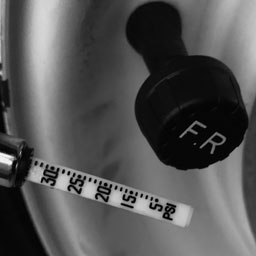
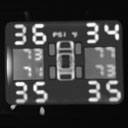
The TPMS monitor arrived. The packaging looked like it was opened along the way going through customs.
It was fairly easy to install. Replace tire stem caps with little knobs. An alarm went off almost immediately as I put one on. I changed the units of measurement so the pressure and temperature were set to PSI and Fahrenheit.
TPMS host display
My tires were setting around 20 psi. The maximum pressure for the tires is rated at 51 psi.
I did some quick research and found most cars have a pressure around 32 psi, and that the door should have a sticker with the recommended tire pressure. I only saw the sticker with the VIN on it. I dug through the owners manual and found that Sebring-Vanguard recommended a tire pressure of 32 psi. Inflated the tires to 35 psi.
RECOMMENDED TIRE PRESSURE
The recommended tire pressure for standard and radial tires, front and rear is 32 psi. A lower tire pressure will give a softer ride, but a lower speed and ranger a higher tire pressure gives better speed and range.
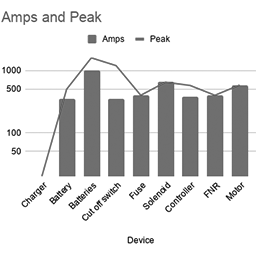
Along with receiving the majority of parts by the end of next week, I’ve been researching battery cables. The first thing was to identify the amps going through everything.
Device
Amps
Peak
Charger
20
20
Battery Monitor
350
500
4 Battery Modules
4 * 250 1000
4 * 400 1600
Battery Switch
350 600@5 min 1200@30 sec
1200
Fuse
400
400
Contact Solenoid
650
650
Motor Controller
380 420@5 min 500@2 min
575
Reversing Contactor
400
400
Motor
52-584
584
Max Amps Allowed
350
400
Amperage that devices can produce, handle, or draw in the circuit
The fuse does not allow any more than 400 amps supplying the motor. From here, I was able to get a general idea of how large the battery cables need to be.
In addition to amps, I also had to take voltage drop into consideration. To do this, you need to know the length of the full path in circuit – battery to motor, and back again. I took some string and laid it out in a large loop around the bench seat. It came out to roughly nine feet.
The parameters are 48 volts @ 400 amps running along nine feet of cable. I found a calculator and put in the following:
Input
Value
Calculated
Material
Copper
Gauge
2/0 AWG 00 AWG
Voltage
48 VDC
1-way circuit length
4.5 feet
Load
400 amps
0.288 VDC
Voltage Drop
47.712 VDC
Voltage at Load
0.6%
Voltage Drop
133100 circular mils
Wire cross section
It appears 2/0 AWG wire will handle the maximum load the fuse will allow with a minimal voltage drop.
In other resources, I’m finding that 00 gauge is often rated for a maximum current of 186 amps, and that you should never exceed 80% of the rating (148.8 amps). Even a 4/0 wire will only be rated for 380 amps max.
In this scenario, it feels like the wire will melt before the fuse breaks. Things that confuse me are that the information that I’m finding is often for bringing electric into a house. I often look at how golf carts are wired up, but they are often working with 2 AWG wire, which is much smaller than 2/0 AWG.
To support 400 amps, I think I would need 500 kcml / 500 mcm of copper wire rated for 90°C. It looks like it costs roughly $14/foot. The wire is thick – as in power lines on telephone poles. I wouldn’t have the ability to afford tools to cut, crimp, and bend the stuff. Besides speed, I think modern EV’s go with higher voltage systems to reduce the amps needed, thus reducing the size of the wire.
The motor controller supports current limiting, so I could force it to use no more than 148.8 amps if I desired.
Someone local that I met on the maiden voyage has a few tools and supplies to help out with that they had used on their own EV.
In other news
D & D Motor Systems is shipping my motor.
Popular Science, June 1975 has been shipped
The portable EVSE has been shipped
I need to do some research on plug breaking / dynamic braking
I may need to contact D & D Motor Systems or Alltrax to see if they have a field map for my specific motor / controller.
The motor controller for our little CitiCar has arrived! This is what will allow us to get the most efficiency out of the motor. The new controller will send 48 volts letting the motor operate at its full power, but pulsed based on how far the throttle is pressed. This gives you a large amount of torque at any speed.
Vanguard multi-voltage speed control
The original motor controller is a contact switch that provides an uninterrupted supply either 48, 24, or around 18 volts to the motor. The same voltage is applied in both forward and reverse.
Nichrome resistor
The first benefit happens when you press the pedal into the the first step. The muti-voltage speed control provides a low voltage by sending 24 volts through a large nichrome resistor. This resistor is often used for heating elements in toasters and deep fryers. Much of the energy is wasted as heat in the first voltage step. With the new motor controller, the full 48 volts is sent to the motor, but in very small pulses. Energy is used more efficiently rather than thrown away as heat.
Curtis PB-8 throttle potentiometer
CitiCar three step throttle switches
The next feature is with the throttle itself. The CitiCars have a three step throttle. There are three contact switches that close or open based on how far you press the accelerator pedal. I’m replacing the CitiCars throttle switches with a potentiometer, known as a pot box. This lets me gradually control the speed. With the existing setup, I have to keep switching between each switch position to control speed so I don’t go too fast or too slow.
When I press the throttle now, the motor immediately jumps with a lot of torque to get to the new speed. This wastes energy. The new motor controller will ramp up the speed gradually in a more efficient manor. It also has the ability to control how many amps are supplied to the motor so that I don’t blow a fuse. The original CitiCar controller lets the battery directly connect to the motor, letting the motor draw as any amps as it needs until a fuse is blown, or the load demand is decreased.
With the new controller, a complex switching of the batteries between a 48 volt and 24 volt configuration is no longer needed. The nominal voltage of the battery bank is simply 48 volts, all the time.
Next Steps
I don’t have everything just yet. There are still a few things that I need before I can switch over to the new setup. Until then, I’ve started reading over the schematics. I have planned out how to wire up the batteries to the motor and controller. I need to measure out new battery cable lengths and size of terminals to fit everywhere.
I purchased an F-N-R (Forward and Reverse) switch to swap the motors connections when traveling in reverse. Some owners just use the original CitiCar contactor for this. Rather than rely on old hardware, I purchased a new switch rated with the amperage that I needed along with suppression diodes. I also ordered a contact switch with a diode and pre-charge resistor.
I was messing up on the coil voltage when ordering switches. I’m working with two voltages – 12 volts and 48 volts. 48 volts is for the motor, but the voltage is also stepped down to 12 volts to control lighting, switches, and accessories. It gets confusing when ordering equipment because it’s not clear which voltage to choose from, since the equipment itself also works with two separate voltages. In the end, make sure its the accessory voltage for the coils (12 volts in my case), or you’ll need to use relays to control your relays.
Initial planning stages of how to wire up batteries, motor, controller, fuse, and switches under the seat.
Voltage
Alltrax does provide a cheaper controller that works with up to 48 volts. However, I was told that the motor I am getting would be capable of running off of 72 volts as long as there was plenty of forced cooling. In that scenario, I wouldn’t need to buy a new controller – just a new set of batteries. Batteries don’t last forever. If there is one thing to know, it’s that voltage equals speed. The more volts you have, the faster you can go.
In other news
D & D Motor Systems responded that my motor will be ready to ship in 2-3 days
D & D Motor Systems has shipped out my contactor switch
I’ve been purchasing misc stuff from AliExpress
Hazard Light Switch
GPS Speedometer
Switch panel for a racing car engine (race mode – alltrax user mode)
Flashing relay switch
12v socket TPMS
Car Bluetooth MP3/USB/SD/FM/AUC decoder board audio modules
Current meter battery capacity monitor
Two more 48v Chevy volt battery modules have been shipped
I’ve filled out a return/replacement request for my portable EVSE
The lithium charger might be drop shipped sometime at the end of the week
Waiting for Zero J1772 adapter with C-19 plug from Tuscan EV
EV Drives is processing my order for a F-N-R switch, and has updated the coil voltage
I was able to connect to the Alltrax controller via USB
A cassette adapter arrived. Plans are to pull out the head and throw it into an 8-track tape.
A few magazines arrived with CitiCar articles in them, and posted on the Magazines page.
It seems like I’ve been constantly getting nowhere with replacing the battery terminal nut. Everything I’ve purchased for battery terminals has been too small. I have a variety of nuts on order, but they won’t be here for a few days.
Tapping a nut
While cleaning up the garage over the weekend, I came across a little 24 piece tap and die set. I considered that maybe I had stripped the threading in the nut, and decided to try tapping it. I could get the CitiCar back on the road quicker, and the nut was already useless at this point.
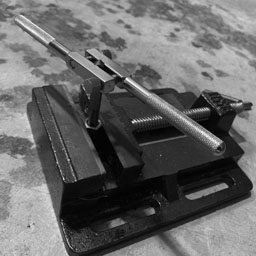
I grabbed a little table vice to hold the nut in place, and opened up the tap and die set. I rolled my eyes as soon as I realized the set was in metric. I probably got this when I was building the Tricolour RepRapPro 3D printer based on plans from the UK. I may eventually end up buying a larger set that also includes both metric and SAE.
I first tried a 9 milometer tap. I could feel the bite as I slowly bit through the metal. Once I was able to freely spin the tap, I tried putting the bolt on the terminal.
Unfortunately, I came up with the same results as every other attempt over the past few days. Too small. I went ahead and tried the 10 millimetre tap. It was much harder, but … success! The bolt slid on the battery terminal just fine. I was able to connect all of the battery cables.
I went ahead and charged all the batteries for our next adventure in the CitiCar. In the meantime, I started looking at how to hook up the EVSE with a transformer that could connect to a public charger and convert the power to 120 volts. From here, the plan was to connect my five individual battery chargers.
EVSE fault
I was quickly blocked as soon as I plugged the EVSE into an outlet. The charger was blinking to indicate that it was protecting from a low/high voltage. I checked that the circuit was wired correctly. I also verified the voltage was in range at 124 volts. I tried outlets around the house on other circuits. I even plugged it into the back of my computers APS power supply to ensure a clean cycle of power.
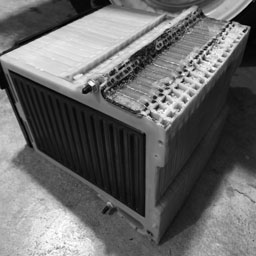
Chevy Volt battery module cut on side
I cut the bottom edge off of another Chevy volt battery module. Although I had a hiccup with the EVSE, a few things are progressing fairly well today.
I think Teddy and I will be able to visit the park and grab some Ice Cream tomorrow.
Video
EVSE Problems
Other News
Some button cell batteries arrived. I was able to fix Teddy’s talking ball. I replaced the battery in my calipers, but the digital readout wouldn’t turn on. I took a closer look and found that one of the contacts looked as if it would touch both the positive and negative parts of the battery. It looked like it was bent down and curved a little. I thought it was a spring when I first saw it. I flipped it up on its side. It matched the curve of the battery and… it broke off.
I remember it was only a few bucks. It still works manually. Perhaps I should invest in something with more quality the next time I go looking for one.
Products
Irwin Industrial Tools 26313 Metric Tap and Hex Die Set, 24-Piece
Megear Level 1-2 EV Charger(100-240V,16A) Portable EVSE Home Electric Vehicle Charging Station Compatible with Chevy Volt, Nissan Leaf, Fiat, Ford Fusion (NEMA6-20 with Adapter for NEMA5-15)
NEW Lithium Ion Chevy Volt 48vdc 2kwh 50ah battery Golf Cart Off Grid Solar EV
DEAL INDUSTRIES INC. 61-501 Receptacle Tester with GFCI, Black
WEN 423DPV 3-Inch Cast Iron Drill Press Vise
Winkeyes 0-6 Inch Digital Vernier Caliper with Inch/MM Conversion Large LCD Screen and Stainless Steel Body Vernier Caliper Tool for Small DIY and Homework, Coin Battery included, 150mm
Pet Qwerks Talking Babble Ball Interactive Pet Toy – Wisecracks & Makes Funny Sounds, Electronic Ball that Talks & Makes Noises – Avoids Boredom & Keeps Your Dog Active
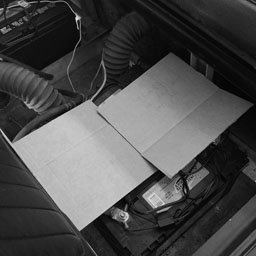
With all of the projects on the CitiCar, one of the most important ones is to upgrade the batteries to Lithium. I found some Lithium Ion Chevy Volt batteries. I took the measurements, made some cardboard cutouts, and tried to plan out where the batteries could sit. I just barely could not fit two on each side. I was hoping that maybe the measurements were off.
I took delivery of two lithium batteries a couple weeks ago. Each module was configured to deliver 48 volts at 50 amp hours, for a capacity of 2 kWh. I spent some time placing the battery modules in different positions in the CitiCars’ battery tray to determine if I could fit more than two batteries under the seats for more range and less demand on each battery.
Chevy Volt battery module on lip at edge of CitiCar battery tray
It wasn’t exactly perfect, but I saw a way to make them fit. I went ahead and ordered two more batteries. I could almost fit a fifth one, but it was simply too tight for my comfort, and I could use the space for other things such as a motor controller, DC-to-DC converter, and possibly the charge controller as well.
Dremel cutting edge of battery module
Tonight I started out trying to cut the bottom flange of the batteries where the batteries coolant had passed through. I watched a few videos on people tearing down the batteries to get an idea where I could cut without coming close to the Li-Ion cells. I got out my rotary tool and went to town.
It quickly turned into a challenge. The layers to cut through are composed of plastic, rubber gaskets, coolant plates, and coolant still remaining within. The smell was pretty awful as well.
Cutting battery module with a hack saw
The rotary tool was having a tough time and was getting too hot to handle. I started using some metal shears and a wrench to chip away a little and strong arm it a bit. I wasn’t getting anywhere fast. In the end, I used a hacksaw.
Battery module on its side with side of coolant tunnel cut off
The hacksaw was quick and clean. Rather than having black rubber melted on everything, I could see the profile of the rubber gaskets and cooling plates against the plastic and air pockets.
It took a bit longer to finish off the bottom cut since it was thicker, and cut into an unused brass threading. I believe it was originally used to both keep the batteries together, and keep the water intake bolted onto the battery. Looking back at the
Chevy Volt battery with bottom right coolant tunnel cut off
Other News
In other news, my 10mm Hex/Allen wrench came in today. It was too big to insert into the axles fill plug. Going down, 9mm is a non standard size. I purchased a set that contained contained a wide range of sizes in both metric and SAE with balls on the end of the arms. The SAE set includes 3/8″ and 5/16″, to which I hope one will fit. It’s also got a set of star wrenches, but I’ve rarely had a use for them in the past.
Some nuts for the battery terminals should arrive tomorrow, allowing me to drive the car again.
I ordered some magazines with articles about CitiCar/Comuta-Car:
Consumer Reports October 1976
Hemmings Classic Car September 2018
Car and Driver March 1994
New York Magazine May 21, 1979
Popular Mechanics July 1974
Golf Car Options Magazine January 2018
Videos
Making a battery fit into a CitiCar
Fitting lithium batteries into the CitiCar
Products
These are the products I’ve purchased that are mentioned.
NEW Lithium Ion Chevy Volt 48vdc 2kwh 50ah battery Golf Cart Off Grid Solar EV
Dremel 4300-5/40 High Performance Rotary Tool Kit with LED Light- 5 Attachments & 40 Accessories- Engraver, Sander, and Polisher- Perfect for Grinding, Cutting, Wood Carving, Sanding, and Engraving
Stanley Hacksaw 24 Tpi 12 “
Columbian By Wilton Aviation Snip Set 3pc. 30676 Straight, Right, Left
Consumer Reports October 1976 Hemmings Classic Car September 2018 Car and Driver March 1994 New York May 21, 1979
Golf Car Options Magazine – January 2018
Popular Mechanics July 1974
REXBETI Hex Key Allen Wrench Set, SAE Metric Star Long Arm Ball End Hex Key Set Tools, Industrial Grade Allen Wrench Set, S2 Steel
I heard back from D&D Motor Systems this morning. It seems the motor is a stock motor – no temperature or speed sensing. I’ll need to figure out what to do in regards to the speedometer.
One of the other CitiCar owners I’ve been speaking with mentioned he was considering using a speedometer based on GPS. My concerns with GPS is in situations that you are unable to receive a signal. I want to know my speed immediately, in real time, with accuracy, regardless of where I am. I’m lacking in the accuracy department at the moment where my speedometer seems to think I’m going 4 miles faster than I really am. Perhaps I need to inflate my tires.
Along with a few answers to my questions, D&D Motor Systems also sent along a performance report of the motor.
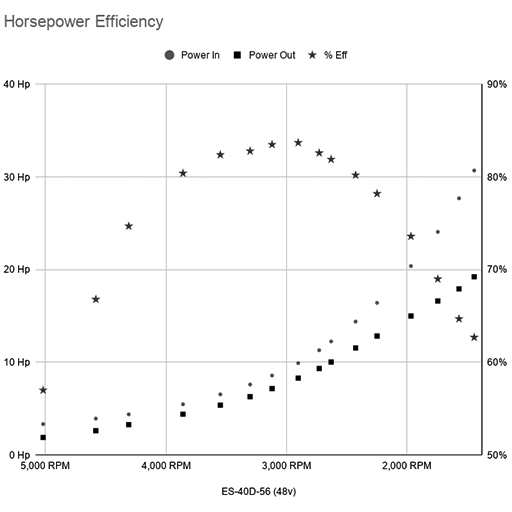
Engineering Performance Test for ES-40D-56
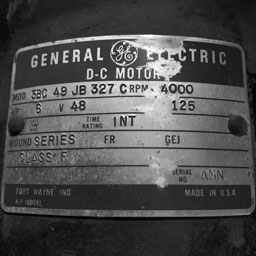
The stock motor that came with the car has the following information on its plate:
Ratings Plate on a stock 6HP CitiCar Motor
RPM
4000
HP
6
V
48
A
125
Wound
Series
Time Rating
INT
Class
F
MOD
5BC 49 JB 327 C
Serial No
AMN
CitiCar specifications on a 6HP motor
I’m not clear on how to compare motors. At first, I thought it was simply comparing which motor had the most horsepower. However, HP is variant based on the load. Voltage is similar. RPM’s… Let’s just say there is so much involved when comparing motors. I had to start reaching out for something to compare.
Comparison
Stock
D&D Motor
RPM
4000
1444 – 5020
Amps
125
52.5 – 583.5
Horsepower
6
in: 3.34 – 30.70 out: 1.90 – 19.24
I feel a bit confused. The motor is both better and worse… I’m certain I’m comparing apples to oranges here since I don’t have a similar table for the stock motor. I’ve heard from another CitiCar owner that the amps can shoot up pretty high on the stock motor while going up a hill. This brings me to wonder, how did General Electric know what to stamp into the motor plate?
As stated in the owners manual, the CitiCar has a 250 amp fuse on the motor.
The same is true driving up long, steep hills. By driving in first speed, and sometimes second speed, under these conditions, you are likely to blow the Citicar’s 250-amp fuse located in the controller box behind the seat.
CitiCar 1976 ½ Owners Manual, Sebring-Vanguard, 1976, page 19
The Mother Earth News article about the CitiCar in Israel had also mentioned the range of amps with the stock motor.
Although initial current draws can reach 500 amps, the average pull at cruising is around 100 amperes.
Israel’s Solar Powered Car, The Mother Earth News, September/October 1980, page 120
Even at that rate, it appears that the new motor will have cruising speeds at 50 amps; half of what the CitiCar can do.
I plugged the performance numbers for the ES-40D-56 motor into an excel spreadsheet and started making some graphs. I like visuals, and I thought it may reveal a pattern and help to compare against with the stock motor that came with the CitiCar.
I saw lots of compounding curves. I wasn’t sure if I was onto something, but I started out comparing RPMs. At 4000 RPM, I assumed the CitiCar motor would use 125 amps and deliver 6 Horsepower – the ratings on its motor plate.
I tried to make a few formulas in the spreadsheet. At 4000 RPM, the new motor would be using around 75 Amps and 4.7 HP. If that’s the case, it’s got a much higher efficiency at only half the amps with less HP to maintain that load/speed. Unfortunately, I’m thinking in a linear scale, so at 4000 RPM’s, it would be just a bit higher for HP and amps – but not by much.
I’m learning about electric motors, and slowly grasping at how to compare them. I believe it will be an improvement. If my calculations are correct, this means that the motor can go further on the same amount of energy.
Coupling the improvement in the motors efficiency with an actual motor controller will further extend the range. I also purchased two more batteries last week to double the range and lessen the load on each of the Chevy Volt batteries.
Other News
In other news, the garage has been cleaned to a point that it is actually organized. Shelving units for indoor gardening have been broken down and moved back into the garage. I have a whole shelving unit dedicated to CitiCar parts. I even have my screw drivers all in one place. Usually I’m having trouble just finding one screwdriver – but now I’m having trouble fitting them all into one container.
Holding CitiCar motor in place
After a great deal of effort, the stock motor is back on the car. The thing is very heavy and difficult to move around while you are laying on the floor.
Battery terminal with nut
A battery nut arrived in the mail, but again – it’s too small. I decided to order nuts that are 7/16 in size, as well as in metric for M8 and M10. I feel like one of those has got to work.
I started on replacing the differential fluid over the weekend, but I got stuck trying to remove the breather cap – which you shouldn’t do. After watching a few videos, I found the filter and drain plugs. I had three #8 Allen wrenches to remove the drain plug, but I had to order a #10 for the filter plug.
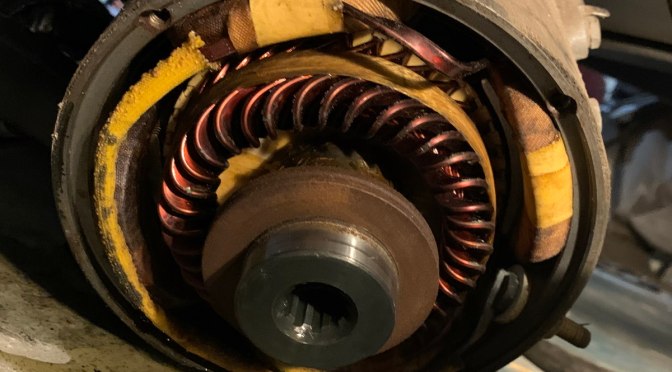
I purchased an old General Electric Motor Bumper for a club car to put inside the armature after I saw a video of someone mentioning not to forget to transfer the bumper into your new motor. It’s supposed to help make the motor a little quieter. Maybe… we shall see. I like the wine the motor makes. I just didn’t see it inside my motor and would like to try it out.
I also started playing with an Aukey DRA5 dash cam.
Pico 0852PT 3/8″ Stainless Steel Battery Hold Down Stud Nut 2 per Package
Too small
EKLIND 14620 10 MM Long Series Hex-L Key allen wrench
Filter Plug
Chevy Volt BMS w/Bluetooth for 48v 12 cell battery w/cell balance & charger cont
goes with batteries
NEW Lithium Ion Chevy Volt 48vdc 2kwh 50ah battery Golf Cart Off Grid Solar EV
more range, shares the load
Club Car Electric GE Motor Bumper (Fits 1982-Up)
Curious on quiet noise
AUKEY Mini Dash Cam 1080p Full HD Dash Camera with 1.5” LCD Screen Car Camera with 170° Wide-Angle Lens, G-Sensor, WDR, Motion Detection, and Clear Night Recording





























 The Chez