Rockland Park

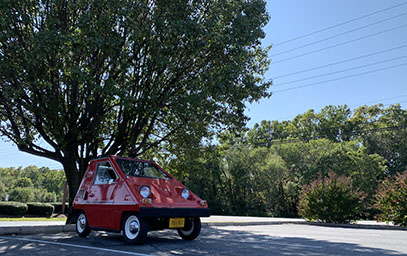
The CitiCar on its first trip to Rockland Park with a clear view of the mountains along the horizon

A trip to Rockland Park is (or was) the next major milestone travel destination. Although the round trip is within the range of the CitiCar, there are many hills along the way, making the trip impossible.

There are two things going for me that make the trip possible. First is that there is a public level 2 charging station on the way. The second thing that helps is that the new Lester charger recharges batteries four times faster than what I was previously using. I had the day planned out earlier in the week.

The weather was a bit cool and looked like it may rain soon. A quick look at a local weather forecast indicated that it had rained in the morning, and that it should be clear for the remainder of the day.

A CitiCar with Spunk

On our way over to the charging station, I noticed rite away that the CitiCar had a bit more pep to it. I was getting speeds up to 35 mph under its own power. I’ve not seen that before in this little car. It’s almost like she is showing off, up for the challenge ahead of us. I’ve got a bit of a hunch that maybe the batteries were overcharged last night while I changed over to the new extension cords, restarting the charging cycles.

As I was about to plug the CitiCar into the charging station, someone stopped their car in front of us and asked how it does on gas. I replied that I don’t buy gas, and pointed to a sign on the building behind me that said Electric Vehicle Charging Station. They looked a bit shocked. I don’t think they realized that charging stations existed.

Teddy and I headed over to the walk-up window at checkers and got a small order of fries. With bits of French fries as a reward, Teddy gave people going through the drive-through lanes a show.

Pushing the Limits

This was it, we were about to go off further out of town than we had ever been in the little CitiCar with more hills to conquer and a small trek through a 55mph zone. Thankfully it was a two lane highway, so I wasn’t holding anyone up. The road to turn off towards the park felt further away than I had expected. Every hill and valley feels like a challenge. Turning onto the road, I went up a hill that just kept going on and on.

I hadn’t driven over railroad tracks before. I was getting a bit anxious about how well the car would take it. I think the car behind me was getting a bit of a kick watching us slow down and take the rails at a slow speed. It was worth it. The suspension and small tires on the CitiCar don’t do well crossing tracks.

Once we crossed over, we turned down the road into the park and everything was easy going after that. Although the limit was only 25 mph, we coasted as much as possible to preserve battery power since no one was behind us. There is a bit of a hill once you enter the park that wasn’t all too bad.

Rockland Park

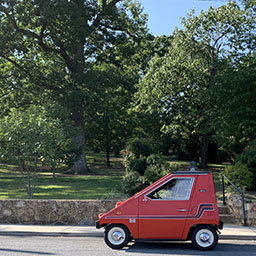
We parked by the fitness equipment with a clear view of the mountains along the horizon. I led Teddy over to walk past the pavilions and a playground to get to the walking path.

Benches are peppered along the asphalt walking path through the woods

One of the things that I like about Rockland Park is the blacktop walking path. You’ve got a hard, flat, and level surface that even strollers could be pushed along without any obstructions (except getting to it). There is a Disc Golf course peppered throughout the woods. Smaller dirt paths through the course cross over the main path, and often have benches at various crossings.

The park has one major detriment to its serene atmosphere. Although Rockland park is large, you’ll always hear the humming and crunching sounds of the power plant nearby. The sound of children playing at a music park often brings more peace to the park, overcoming this background noise.

The path that leads down to the Shenandoah river will take you under some power lines

I was in such an adventurous spirit that I decided to take a path that I have always avoided. It goes under some high power electric lines. Listening to the air heat up around the electric lines gives me a fright with thoughts of being struck by a bolt of electrons, or having a device malfunction. I figured if everyone can walk through without damaging their phones, I should be fine. I just kept my focus on Teddy and we kept going.

A fork in the path makes you question yourself as to which way to go in life

The path had some nice views of the Shenandoah river. It went down to a fork and a little bench where the asphalt ended. Teddy and I headed left, as it looked like it would take us closer to the river. Sure enough, we got to the end with a little spot where we could sit on some old concrete blocks. The area could use a bench to sit back and enjoy the view.

A small spot was found to kickback and rest for a moment along the Shenandoah river

We watched a few boats pass and wave at us. Teddy would get a bit focused when each boats wake would reach the shore, making sloshing sounds in various places around us.

Teddy makes walking small paths a bit less intimidating and warns animals to stay away

We headed back on up to the fork. Teddy seemed to be leading the way, excited to come back the way we came. We continued down in the other direction. I could hear golf balls being hit. It eventually brought us to a golf course where the path becomes shared with golf carts. I looked on a satellite map and couldn’t see if any of the paths would lead around, back to the park. Instead, Teddy and I headed back to where we came from.

On the way back under the power lines, I felt more confident walking under them. We continued on our original path on the main loop and walked up onto a white tailed doe on the path. The deer just looked at us. After Teddy started barking, she took off.

Charge

We got back to the CitiCar and headed back to the charging station. The battery was down to 70%. A person came up to ask about the car just as I was about to get Teddy out. We are getting stopped often to talk about this car. I went over some details of how I am able to charge an antique car from the 70’s at a public charging station. I got a combo meal at Checkers while we waited for the car to recharge.

Main Street

It was time to go back home – or was it? There wasn’t much else to do today and the battery meter was reporting a 100% charge. I decided to head over to Gertrude. Along the way, I made another split decision to run on up to the town square instead. While walking around, I noticed a new store is opening called, I want candy. I also grabbed a photo of some painted garden poles outside The Studio – A Place for Learning.
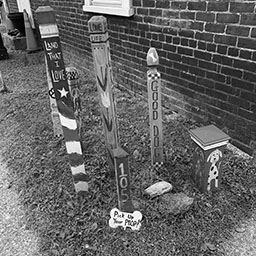
Painted garden posts are on display next to the studio on Main Street

After walking around for a bit, I decided to stop into Lions park and let Teddy have a little walk and quick drink out of Happy Creek. We were shortly on our way back home.

The total cruise was a whopping 15.7 miles – 41% further than the CitiCar’s previous record! With free charging, the average price per mile was brought town to 2.1¢.

DestinationTripAH returnedCharge Time
Home0
Charging Station2.86.800:23
Rockland5.5
Charging Station8.08.900:31
Town Square12.0
Gertrude13.1
Home15.754.603:29
Total70.304:23
Views of Rockland Park

In Other News

Moving the GPS receiver from the dashboard to the front, under the CitiCars’ “hood” area has greatly reduced the time it takes to acquire a signal. It appears that the aluminum frame does play a big part of disrupting GPS signals.
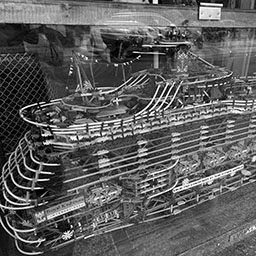
Cruise Ship

Todays trip was a quick visit to the town square. We hadn’t taken the CitiCar to Main street for a while. I saw that the store next to the ice cream shop had an eight and a half foot cruise ship made out of K’NEX called K’nector of the Seas, made by Glenn Mikulak. It’s just impressive with how large and detailed it is.

K’nector of the Seas Stern
K’nector of the Seas Bow

I found this website about Glenn and his model ship: www.glennship.com

Thick Wires

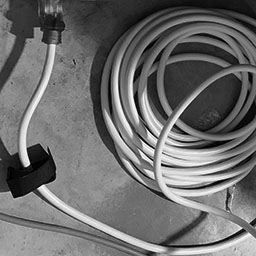
Thick 12 gauge extension cord next to a thinner extension cord

With yesterdays notice of warm wires, I headed off to the hardware store tonight and picked up the thickest gauge extension cord that I could find. I found a 50 foot heavy duty extension cord that was made of 12 gauge wires. Technically, it’s thick enough for 20 amps. As for the power strip itself, I found a three foot extension cord that was also made of 12 gauge wire, but also had a three plug splitter on the end. I am no longer worried about that wire heating up.

Scratched Window

Scratches and pitting in passenger window

The driver and passenger windows have quite a bit of pitting that’s noticeable in the right light. It’s difficult to see, but it’s something that keeps bugging me ever since I purchased the car. I’ve started looking at how to fixe the problem.

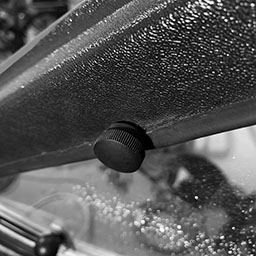
One of four knobs on the passenger door keeping the window secured

The 1976 1/2 CitiCar has four thumb-screw knobs keeping the window held in. Once they are removed, the window can be removed by pushing it out from the inside. After pushing the window out, I noticed the crack on the passenger door wraps around under the window.

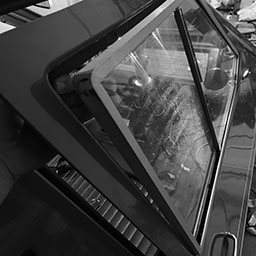
Passenger door window being popped out from the CitiCar.

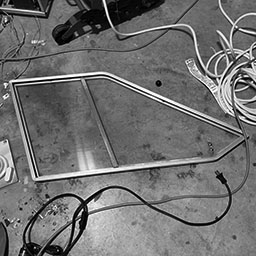
I unscrewed the window handle and laid the window on the garage floor. I cleaned up the window with a towel and tried to buff it with some polishing cleaner. Although the window looked cleaner, the pits and scratches remained.

Passenger door window with window handle just above it

One of the things I noticed in one corner of the non-movable pane was a label indicating the material was made of Swedcast 300 Acrylic Safety Glazing M 7 AS4. I found that SWEDCAST 300 was registered by Swedlow Inc. in Garden Grove, California

Label indicating door window material

Half of me is thinking it would be better to replace the panes with real glass or something similar to what is there now. It’s late. This repair job will continue tomorrow…

Moving Chargers

Teddy and I headed over to Gertrude in the CitiCar late in the evening. It was getting into the twilight hours, and we had our lights on. Arriving back home and hooking up the charger, I noticed the cover for the contacts was fairly warm. I’m concerned that there is some arcing going on, or too many amps are passing through. It could also have something to do with the proximity of the new charger next to it.

Back to Front

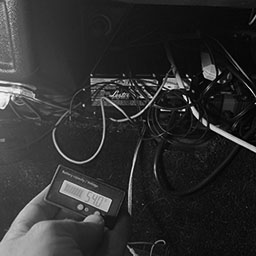
I removed four of the 12 volt battery chargers in the back of the CitiCar as well as their quick disconnect plugs from the battery terminals. I moved the last 12v charger to be next to the accessory battery. I sat the Lester charger next to it as well. I got underneath the car and ran the charging wires from under the seat to the front of the car. While I was down there, I ran an extra set of wires to the front to hook up my battery meter.

Chargers moved to front of car along with a battery meter.

I no longer need to open up the seat to check the voltage. The Lester charger bumps the voltage so high that the volt meter no longer operates until the batteries stop charging. Unfortunately, the wires and chargers look like a giant rat nest.

High Current

The charging app had settings for the cable size at 12 gauge. I have a smaller 14 gauge wire from the battery to the terminal bus bar, but the app wouldn’t let me select a smaller size. To work around the problem, I added an extra 14 gauge wire to both the positive and negative busbar terminals.

Two 14 gauge wires are used to support the current of a 12 gauge wire

I’ve noticed that the wires for the power strip and the Lester charger tend to heat up. The Kill A Watt meter shows a 20% higher wattage being used than the charger is rated for. My goal is to wire up the outlet in the front of the CitiCar to a standard household outlet, and remove the power strip. I’ve also noticed a smell of spoiled eggs when charging. I keep leaving the garage door open just to feel like I’m doing something that might be safer.

I’ll need to wire up a J1772 inlet into the same line, but first I need to find a 12 volt charger that can sense if it is connected to 120 or 240 volts.

Interference

I saw a video on YouTube where someone was demonstrating the effect aluminum has on detecting GPS satellites. I moved the speedometer GPS sensor to another part of the car.

In other news

Rather than splitting out my biweekly deposit through weighted positions in my portfolio, I decided to throw it at Tesla. The companies stock usually does so well that my deposits usually go to everything else that is underweight unless I manually intervene. I feel like I’m playing catch up. It’s nice to finally see the number of shares rather than just the price going up for a change.

Secret Hyperjets

The Lester summit series II charger has been tucked into the back of the car. I talked with the Lester tech support and found that the default charging profile is fine for the batteries that I have, and that the “bubbling” is a very important part of the charging process. I also asked about the battery state of charge remaining at 100% after driving around. The response was that the SoC will not update until you connect to AC power. I don’t like the idea of it reporting outdated SoC information, but sure enough, it updated once I plugged the charger in.

I broke my previous record, pushing the limit to 11.1 miles on one charge. The speed at which the Lester charger can replenish the batteries is phenomenal. It was charging at 3.11 miles per hour compared. This is four times faster than the average 0.8 mph charging rate. The watt per hour has come down 25% from the first charge on the Lester, but it’s still a bit high.

The increased recharge rate is giving new life into the car. I really want to get the new lithium batteries installed. I took a second trip today just because I could. I’ve driven 16.3 miles in the CitiCar today.

I went ahead and soldered wires to one of the replacement buttons I got for the GPS speedometer. I removed the broken one, wired everything together, and confirmed that it now resets the odometer. I no longer need to bend over and ground a loose wire on the cigarette adapter to reset it.

Odometer button labeled as Secret Hyperjets

Just for extra fun, I used my Dynmo 1550 tapewriter. I labeled it “Secret Hyperjets”, a reference to the Spaceballs Eagle 5 going into hyperactive. I’m not bold enough to claim that my CitiCar has a plaid mode.

I also spent a little bit more time aligning the steering wheel again.

Installing CitiCar Secret Hyperjets

Vacation Day

Early Voting

“I Voted” sticker given out to voters at Front Royal, VA Registrars office after voting

Today is Tesla battery investor day. A vacation day was in order. A quick trip to the registrar for some early voting was followed with a relaxing vacation day with Teddy.

Happy Creek flows past a pavilion in Gertrude Miller community park

Gertrude, as with most trips, was first on our list of destinations. Teddy slowly made his way around the park. We hung out on the side of happy creek by the wooden overlook. Small fish were swimming about, and Teddy found an old mangled baseball in the creek.

Teddy sits behind the CitiCar at Kentucky Fried Chicken

We were soon on our way over to KFC. I made sure to ask for a cup holder since the CitiCar doesn’t have a place to hold drinks.

CitiCar parked in the shade of a tree

One of the great things about a CitiCar is that you can back into a space half-way, and have quite a bit of room to sit on the curb and lay out your meal on the ground behind the car. In Teddy’s case, I’m able to put a cup of water and some ice cubes on a lid that he can’t knock over and spill.

Teddy, with a little custard ice cream on his nose, is as happy as happy can be

The next stop was at B&L Custard. The owner asked us where our little red car was. I pointed, but a larger car was obstructing her view. Teddy had his usual “Pup Cup” and got a bit messy with it. I had a strawberry shortcake sundae in a waffle bowl.

CitiCar parked at Bowman Park in Front Royal, Virginia

Next on our little trip was a visit to Bowman park. It’s a small park that I rarely visit, and we hadn’t driven to the the park with the CitiCar yet. A few picnic tables and benches are scattered throughout about an acre of land on a gradual incline. The park has very old and thick trees. Acorns were falling fairly often, but I didn’t see any squirrels.

Sidewalk through Bowman Park in Front Royal, Virginia

Laying against a tree for awhile, I had started to lose track of time until the church bell rang at half past four. It was time to be on our way back home.

Lewie and Teddy laying against a large tree at Bowman Park in Front Royal, Virginia

New Charger

The Lester Summit Series II charger arrived while we were out on our little trip through town. I plugged the car into the regular battery chargers and started to look over the instructions for the new charger, attaching wires and screwing the cover on. Tesla Battery Investor Day started while I was going over the details and I had a live stream playing while I continued to work on the charger.

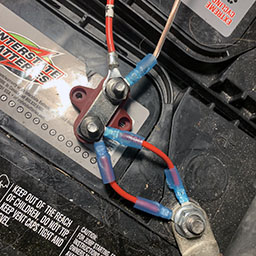
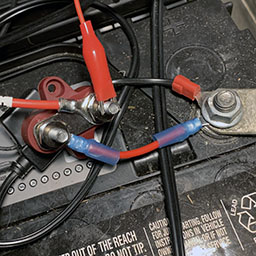
Busbar with wire that has large enough ring terminal to go around battery terminal

The ring terminals that came with the charger were too small for the battery terminals that came in the CitiCar. I created a pair of wires with ring terminals large enough to connect to the battery terminals and connected them to bus bar terminals. The charger powered up and I was able to connect to it via Bluetooth.

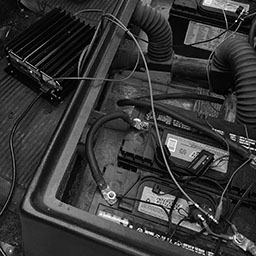
The Lester Summit Series II charger is wired up to four 12v batteries that powers the CitiCar motor

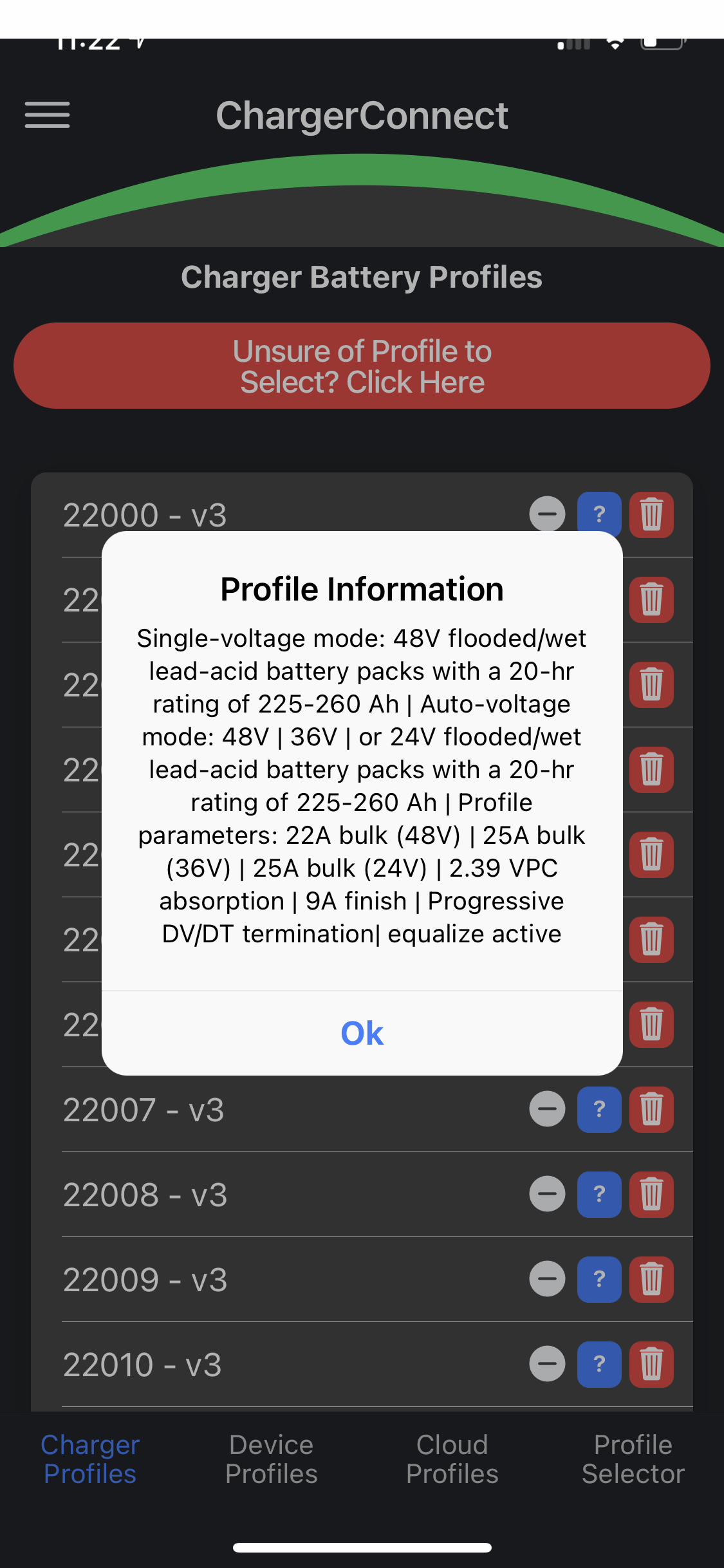
The default battery profile was for 22001. It wasn’t all that descriptive. I went to the battery profile selector, choose battery manufacturer as “Interstate”. After being unable to find my battery model number, the app told me to contact Lester Electrical by phone. The office was closed. I left a message with technical support.

The default profile seems like it would be okay…

I looked into what 22001 was about. The profile information said it was for a 48v flooded/wet lead-acid battery pack with a 20-hour rating of 225-260 Ah. I don’t know what effect amp hour capacity has on the charging process. I didn’t know what kind of Amp Hours my batteries had.

BrandInterstate
Model31-ECL
Reserve Capacity (RC)190 @ 25 amps
Guessing: 190 minutes / 60 minutes3.166 hours @ 25 amps
Guessing: 3.166 hours * 25 amps79.166 Amp Hours
Final Answer…79 Amp Hours

I decided to give the default setting a go. I immediately noticed a difference in the amount of watts used to charge the battery. When using the five individual battery chargers in the past, they used a combined wattage of about 333 watts. The charger was using 1165!

The CitiCar batteries were charging up fairly quickly. It was great being able to see the current state of charge, phase, and predicted time for the charging process to complete. With the other chargers, I would have been waiting 11 hours to recharge at a rate of 0.8 miles per hour,

Towards the end of the charging cycle, I noticed that the voltage was fairly high for charging batteries at 64.1 volts (16.0 volts per battery). In the past, my other chargers would only go up to 14.5 volts on an individual battery. I went to check on the car and it sounded like the batteries were boiling. I opened the garage door as a precautionary measure to ventilate. I didn’t smell anything, but I wanted to be safe. I reached out to other C-Car owners. One confirmed that they had this issue as well and were told the batteries were okay.

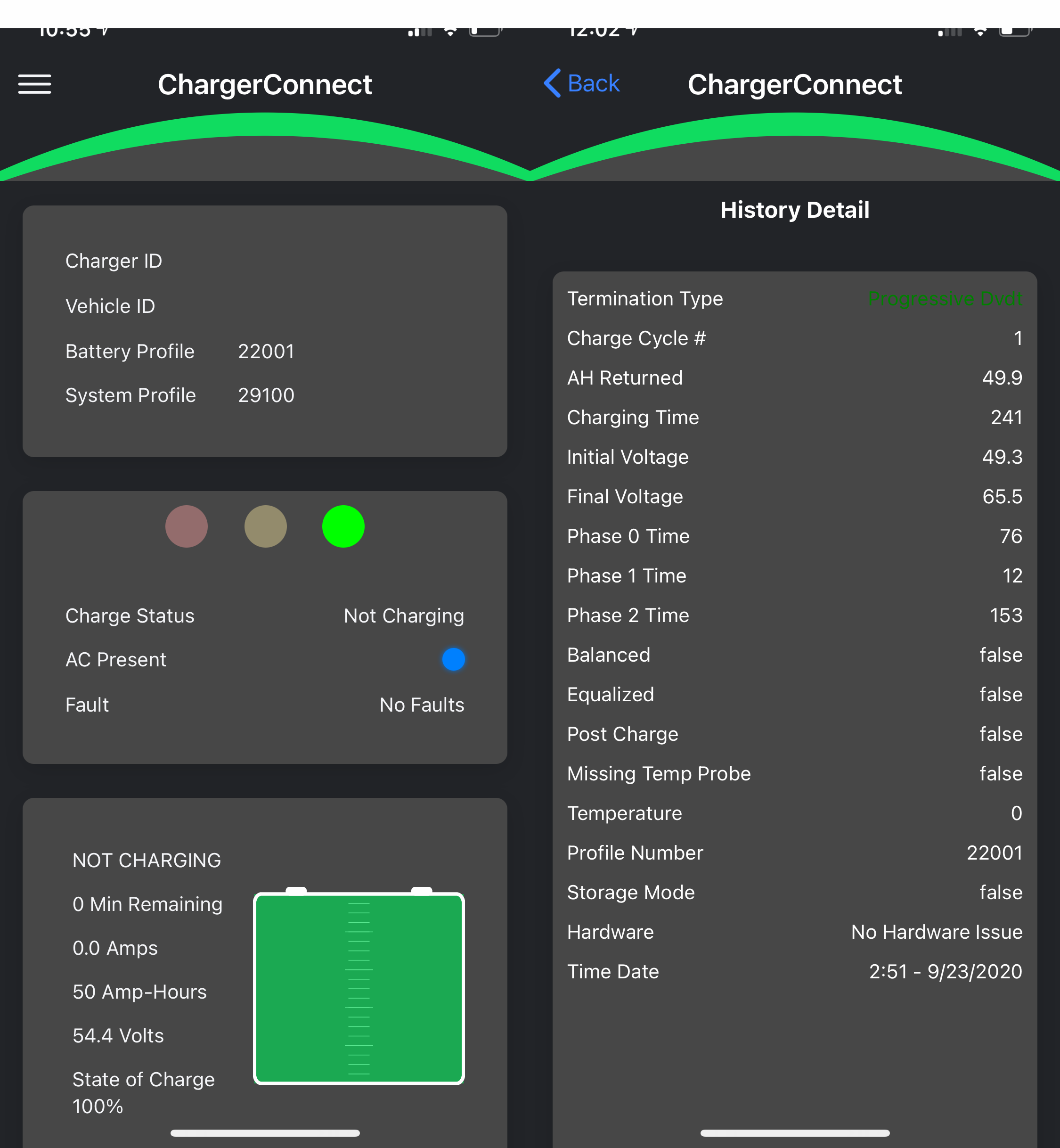
The last phase seemed to drop the estimate drastically, stating 13 minutes, but was off by almost two hours. I thought maybe the temperature drop outside was having an effect on the chargers thoughts on how much the voltage needed to increase as the weather got colder. At least I now know that my batteries can hold 50 amp hours.

TimeRemainingAmpsAHVoltsSoC
6:5272720.5151.929%
7:0353320.4452.360%
7:3450519.81453.963%
7:4449519.61754.664%
8:331919.02964.190%
9:06139.03464.792%
9:3539.03964.993%
9:3939.03964.893%
9:4729.04064.994%
10:55005054.4100%
A review of the first charge cycle

The end result was a charge that would normally take 11 hours was done in five and a half. I was charging at 1.63 miles per hour! Unfortunately it looks like the quick charge rate also increases the watt hours per mile. I’m often averaging around 280 watt hours, but the recharge from this trip was 391 watt hours per mile.

Due to the quick charge rate, I could potentially take two trips in the CitiCar per day. I could take off with Teddy to the dog park in the mornings and go for a second ride in the evenings.

One thing to consider is that the batteries were being charged for a little over an hour on the old chargers before switching over. I may have been able to shave an hour off of the charge time if they started out on this charger from the beginning. The results from the next trip may give a better baseline of what to expect in future charge times and costs.

Charging interface for Lister Charger Connect after the first charging cycle completed

I’m hoping that the over-charge voltage was a one-time conditioning of some kind. I don’t like the idea of degrading the batteries from overcharging. When looking at the logs, I suspect that this will happen every time. I’m hoping that it will consider the time from prior charges to improve the accuracy of estimated time remaining on a charge.

If everything works out well, and there is a profile for the Chevy Volt batteries, I’d like to use this charger for the lithium ion batteries as well since it has quite a lot of features through its app, and it also has extra wires to give it the ability to prevent the car from going anywhere when connected to AC power.

After the batteries were charged to 100%, the charger wasn’t registering any power on the Kill a watt meter at all. Not even a watt. It’s powered by the battery pack alone. The other chargers that I had would always draw about two watts each after the batteries were fully charged – adding to the overall cost of maintaining the battery pack that that I don’t record in my logs. They would also draw more power every now and then in the “float” phase to maintain the battery voltage over time.

In Other News

Battery investor day went well. I just wish I could get ahold of some of those new batteries for the CitiCar. It’s an interesting concept to use the batteries as structural support as part of the frame. The whole car frame of the CitiCar is already used as ground. I went ahead and put in an order for another $500 of TSLA shares in the morning.

The speedometer has trouble getting a GPS signal sometimes, resulting in unaccounted miles if I take off before it acquires its position. In addition, the speedometer does not report speed until it has a signal. The sky was clear today and I would be waiting for a minute or two waiting for the timer to catch the signal.

Teddys Day

Eastham Park

Trail behind dog park at Eastham park in Front Royal, VA

A large part of Sunday was spent walking throughout Eastham park. Although they have a large dog park, the one for large dogs is currently closed. It was a clear day and very enjoyable to walk along the Shenandoah River. With a large number of squirrels darting around, Teddy was alert and ready for the chase.

The next stop was at McDonald’s. Meals are eaten outside, often setting on the curve next to the CitiCar. Teddy is learning not to beg during meals, but he earns a nice reward at the end.

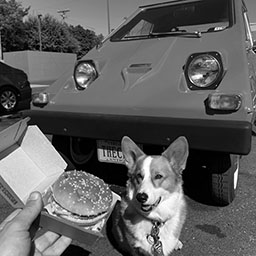
Setting in front of a CitiCar, Teddy is tempted to eat a Big Mac

The trip home from the dog park on Sunday was a bit of a fright. Although there was power, the CitiCar would not supply power to the motor. In town, it’s fairly easy to find a spot to pull over and park to diagnose the issue. It was suspected that the contactor fuse may have blown.

Upon inspection, the main fuse looked fine. The wires from the 12 volt battery were made more secure the other day after a loss of power disconnecting wires from a hard turn. The main power wires from the 12 volt accessory battery looked fine as well. The repairs were holding it in place.

A quick hop into the car to confirm the issue was still present revealed that it went away on its own. As the key turned, the main contactor click could be heard. It is thought that maybe the switch on the brake was stuck in position, preventing the main contactor to be activated when braking.

Shorter Trips

It’s now known that the CitiCar starts to get exhausted around ten miles. Rather than setting destinations to push the limits, rides have become more casual. It’s great knowing that certain destinations are within range. There are many parks, restaurants, and events on main street accessible within just a few miles. Having success at a charging station adds to the freedom to go anywhere… within an extra mile.

The battery chargers have been left connected to the batteries while driving around in the CitiCar. The time to setup for charging has been simplified to connecting the power strip to the main power in a house, or to the J1772 power converter.

Steering Wheel Adjustments

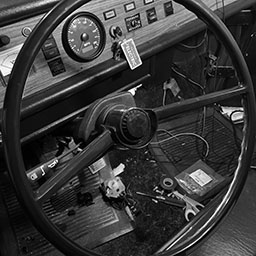
There have been a few problems with the steering wheel alignment since the turn signal switch has been replaced. Each time that it appears to have been fixed, the next trip reveals a little more fine tuning is required. It’s now to the point that the steering wheel is rotated by one or two splines after each trip.

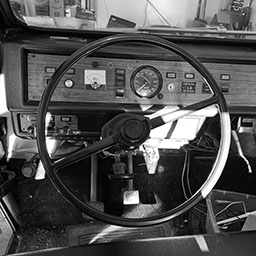
Misaligned steering wheel
Still misaligned steering wheel

In the middle of adjusting the steering wheel, Teddy finally caught a squirrel in his own yard at home. It was difficult to break his concentration. He finally had to be pulled off and go inside to calm down with a treat and let the squirrel get away.

Controller Mounting

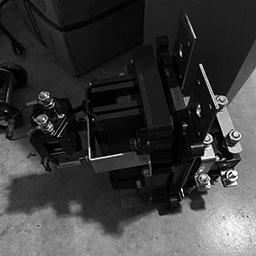
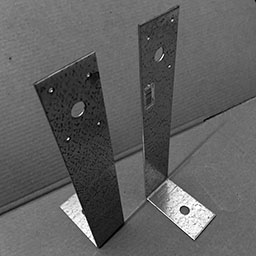
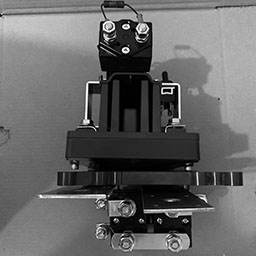
The next goal is to get the contactor switch, motor controller, and forward/reverse switches installed under the seat. They don’t need to be wired up just yet. A mounting bracket arrived this morning, and there were a few metal angles purchased at the hardware store to help fasten things into an area in front of the motor. Each step is being worked through and planned out. One of the problems that has popped up is that the bolts with the solenoid mounting hardware are too long.

Layout of motor controller and contact switches on both sides of angle brackets
Angle brackets to bolt down to the battery box floor
Layout of motor controller and contact switches on both sides of angle brackets
Mounting screws are too long to secure solenoid to the mounting bracket

Other News

Tomorrow is Battery Investor Day for Tesla. It was an excuse to take the day off of work. An extra $500 was invested into the company this morning. The unrealized value is roughly half of what is needed for a Cybertruck reservation.

After two repairs by a tow truck driver and a neighbor, the SUV shifter cable has been replaced by the professionals. It was noticed that the rear passenger window is unable to be opened from the front driver-side buttons.

The buttons arrived for the GPS speedometer. Installation continues tomorrow.

There is an issue arising from a battery monitor that I purchased in China at the beginning of August that hasn’t arrived yet. The seller claims it has already been delivered, but the post office claims they haven’t received the package yet.

Charged

I suspected the last time I went to the charger, it stopped supplying power because I may have turned off the power strip. It was time to give it another go.

Five battery chargers for 12v car batteries in the back of a CitiCar

I moved the battery chargers into the back of the CitiCar. I zip tied wires going to the outlets, and made sure I could see them all face up. Everything is setup for a quick change between J1772 charging, and charging from a standard house outlet.

Teddy and I hopped into the CitiCar and took off for the charging station. Driving around with the new turn signal switch, things felt much simpler. Who would have imagined how much luxury a fully operational turn signal switch would add to a car?

The thing that got to me was that after all of the care I went through to align the steering wheel correctly yesterday, it still wasn’t aligned. I couldn’t wrap my hands at the 10 and 2 positions, and my mind kept wanting to level it off. The car pulls to the side when hitting the breaks, making the problem worse.

Misaligned steering wheel

Just like the last time, we saw the red Tesla and parked next to it. I connected to the charging station and confirmed everything had power before we headed over to Checkers for some lunch.

After picking up our food, Teddy and I sat on the grass in the shade of a tree. It was a great day. Nice weather, light breeze, with sounds of people and nature in the background.

The CitiCar was still charging afterwards, which confirmed my guess as to why the charger stopped supplying power the last time. It wasn’t due to a low power draw – but rather, I bumped the power strip to the off position.

I proceeded to take Teddy for a little walk. When we headed back to the car, the Kill A Watt meter showed that we got 0.2 kWh in 47 minutes. That is almost a mile added to the car. I now have a baseline to improve charging speed.

We drove over to Lowe’s and picked up some stud fasteners as a possible solution to bolt our switches and the motor controller into the car.

When I got home, I made sure the car was driving in a strait direction. I took a look at the steering wheel. I found an easier way to remove the cap without any tools. Once I took off the wheel, I rotated a plastic ring on the switch to line up with the steering wheels bolt, and placed the wheel back onto the steering column in the correct position.

Speedometer

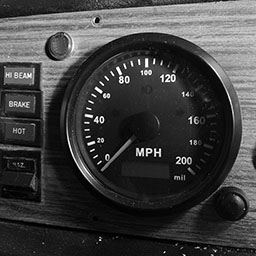
The speedometer that I installed in the CitiCar came with a button to switch between the trip and lifetime odometer. I hadn’t installed the button yet. Instead, I’ve been resetting the trip odometer by grounding the end of the external button wire with the edge of the cigarette lighter. It looks like I’m trying to hot-wire the car when I bend down to grab the wire and line it up.

Grounding out speedometer external button wire on cigarette lighter

I decided it was time to make life simpler on myself and install the button that came with it.

Now that the charger is no longer bolted inside the car, I can stick my head in the area and look back up at the dashboard from behind. I was able to confirm that there weren’t any wires on the bottom right of the speedometer. I drilled out a 15/32″ hole, fairly slowly. The aluminum dashboard panel in the CitiCar is fairly thick.

The tricky part now was to connect the button up. The metal tabs are small. The spade connectors that I have are too large. My goal was to solder some wires onto the switch and put spade terminals on those wires.

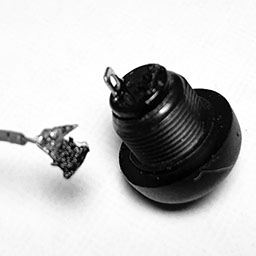
Terminal melted off of a plastic button

Not every goal is met. I’ve been out of my thin soldering wire for some time. The terminal melted off when I began to heat it up with the tip of my soldering iron. I looked at a few videos online and found that I should have threaded the wire through the hole first, then twist it tight, and proceed to heat up the wire instead.

I found the same exact 12mm waterproof momentary push button switch and ordered aa pack of 15 with five colors. I’ll be able to make 14 more mistakes before I order more.

For now, I plugged up the hole with the defunct button. I’ll continue to use the cigarette lighter to reset the trip odometer.

GPS Speedometer with an external button
How to remove the steering wheel cap on a CitiCar

Jiggly Lights

Whining Motor

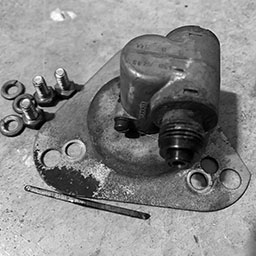
Manual speedometer gear housing for a CitiCar motor

On our lunchbreak, we started to take off in the CitiCar. There was an odor and a whining noise. It suddenly changed its pitch to be a bit more frantic. Since I removed the speedometer cable last night, I had a hunch that it was the speedometer gear housing that was still on the motor. It was probably a combination of spinning the metal shaft, the entire gear housing, or a combination of the two. After removing it, Teddy and I were zipping off to the park without any more whining.

We were followed into the park and asked about the car. A brief conversation ensured before Teddy interrupted with “Nature’s Call”. After our little walk, we then got custard where someone chimed that they had a Tesla, and thought a CitiCar wouldn’t be useful in Miami, Florida. After learning that the cars were manufactured in Florida, they clarified that they couldn’t use it on the highways.

I was able to clock in a new record at 10.3 miles on the trip odometer as we arrived back home.

High Beams

My high beams continue to turn on while driving, and sometimes on their own while parked. One of the C-Car owners shared an image of a turn signal switch that might be compatible. I found an imported after-market turn signal switch for a Triumph Spitfire 1977-1980.

CitiCar stock Lucas UK turn signal switch vs aftermarket Triumph Spitfire 1977-1980 turn signal switch

I was able to take off the steering wheel cap using a wrench. The nut underneath was not tight at all. I suspect I was following in the prior owners footsteps. The steering wheel lifted off without any effort. The turn signal switch had a screw underneath that kept it secure to the steering wheel column. After loosening the screw, the switch lifted up most of the way, but was held back by the wires. I was able to have enough room to slide it off of the steering wheel spline.

A piece of plastic that broke off of the high-beam switch

The switch was missing a piece of plastic that was later found setting inside the steering wheel columns cover. The original CitiCar turn signal switch could not be repaired.

Spade connectors crimped to turn signal switch wires

I cut it free of its wires and matched them up to the new signals wires. The new switch had separate wires for the high beams, and the flash. I was able to join the two wires so that they both operated the high beams.

Once the wires were connected, I discovered that the high beams would no longer work unless the regular lights were on. I’m used to the high beams always coming on regardless if the lights are on, so it feels a little odd.

When assembling the steering wheel, I paid close attention to the self-canceling signals. This has been a problem that I’ve had in the past where the signals don’t seem cancel – or at least, not always. Now they do. I believe the prior owner didn’t pay attention to the correct orientation when putting the wheel back on the steering column. When placed upside down, you would have to turn further left/right before the signal could be canceled. Merging into lanes without much turning of the wheel would have no chance of being canceled.
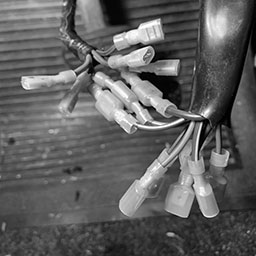
The CitiCar steering wheel with an after-market turn signal switch

In one sense, it almost feels like I have a new car. The turn signal was a constant problem where I would have to actively check often if the high beams came on, and verify that the signals switched off. I would previously go for a walk in the park and come back to see that my high beams came on, draining the battery.

Original steering wheel stalk vs after-market stalk with symbols

I really wish I could have fixed the original switch, or at least use its stalk on the new signal switch.

In Other News

The Tucson EV J1772 to Zero adapter arrived. It had the correct plug for my charger and my EVSE was able to communicate and supply power through it.

I got a phone call this morning that the part for my SUV didn’t arrive at the dealership. Saturday will be very busy, so it may not be repaired until Monday.

CitiCar Turn Switch Replacement

Speedometer Cable

Now that I’m using a GPS speedometer, the existing speedometer cable is no longer needed. The cable was entering the floor next to where the new throttle was installed, and I was fairly concerned that it could get caught up on the arm. It also clears up the mess of wires behind the dashboard a bit.

Speedometer cable entering car through floor next to throttle pot box

There was a bunch of black rubbery caulk where it entered through the floor. Once the caulk was removed, I saw that the throttle I installed covered part of the opening. It was difficult with the room remaining – but after working with it, I was able to pull the end with the bolt out.

The next part was pulling the cable off of the underside of the car. It was threaded above the brake lines and emergency break. Once I got most of it pulled through and hanging out of the front of the car, the next step was to remove the other end.

I was able to unbolt the speedometer cable by reaching down into the battery compartment. It was a tight area trying to get a good grip with some pliers, but it was easier than pulling the bolt through the floor.

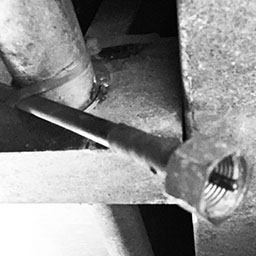
Speedometer cable zip tied to underside of CitiCar frame

I thought I was home free as the wire started sliding freely under the carriage until I hit a snag. It was in a tight spot that I couldn’t see. I got out my phone and looked around. A zip-tie was holding it against the frame. After confirming that no other wires were being held in place, I jacked up the car enough that I could reach up with some tin-snips and cut the zip tie.

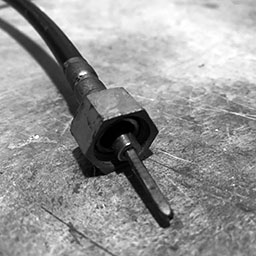
The cable is fairly sturdy and doesn’t like bending much. It was holding its shape pretty well after being removed from the car. Each end has a metal shaft that spins to indicate how fast the motor is spinning. It may seem like a simple task, but its another step forward. Progress.

In other news

I took my SUV into a car dealership. I’ve had two people “fix” it already, and it feels like I’m losing money on temporary fixes. The professionals took a look at it. Although only a fastener on the transmission was broken, I was told that the shifter cable needed to be replaced as well since it’s more of a combination of the cable and fastener.

The parts will be in tomorrow morning. I had the option to bring it home, but I was told that the vehicle broke again as they parked it. I felt lucky that I was able to get it to the dealership, and wasn’t about to tempt fate again driving it home and back. The walk home was about three miles. I sense another long walk in my immediate future.

The walk home had me thinking of what options I may have to haul the CiitCar on a small trailer, that the CitiCar could haul on its own. It would have to be very lightweight and support the CitiCars weight. It would give me the option of hauling it to a destination where the towing vehicle can be dropped off. Both of my primary vehicles have a hitch. I would need to determine where I could install a hitch on the CitiCar.

Another thing to look into is if the trailer could serve as some kind of car jack that would make it easier for me to get underneath of the car to make upgrades and repairs. Of course, I would have to stabilize the trailer – but it would seam to be a safer way to jack it up, and to a higher level.

Ten Miles

I awoke to the sound of construction in my quiet little subdivision. I peered out the window and saw road paving equipment. My mind was racing in determining how to move my vehicles off the road. Upon further investigation, I soon realized the construction crew was digging holes in the middle of the road for the fiber optic installation and patching them over. Crisis averted.

On my lunch break, I picked up a battery for my car. Teddy and I came back home with 8.5 miles on the trip odometer. I decided to zip around the neighborhood and bump the trip past 10 miles. The roads in the neighborhood were more bumpier than I had thought. I think Teddy had just as much fun as me, sticking his head out the window.

We made it home with a new record of 10.2 miles for the trip, and the lowest battery voltage recorded at 47.1 volts. The car was still driving just fine without showing signs of slowing down.

I later installed the new car battery into my other car and was able to move it to the driveway. As for the SUV, I contacted a local dealership, inquiring about repairs. I’ve had two people give it a temporary fix, and I need something more permanent.

Throttle Installation

I finished installing the new throttle tonight. Most of the delays were associated with trying to figure out how to put the throttle in the car, fabricating parts, and waiting for parts to arrive.

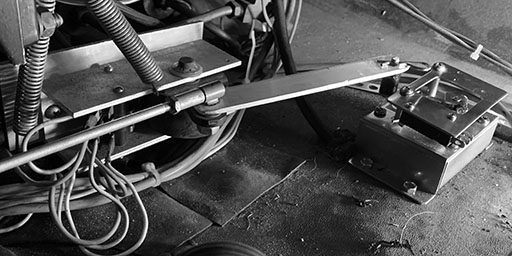
Curtis PB-8 Throttle Potbox installed in-line with Sebring-Vanguard CitiCar step controller

Tonight I assembled an aluminium bar with a clevis pin and a cotter pin. I used spacers to elevate it. I divided one of the spacers in half so that I could fit them both in between the aluminum rod and the throttles arm. Bolting the throttle to the floor was a bit difficult due to the awkward position of trying to drill while the hood (or lack there of) was in the way.

In Other News

I’ve decided to go ahead and get the Lester Summit Series II charger. I was set on it before it was recommended that I get the Schauer charger I have now. The Lester charger has a few things over the Schauer charger:

  • QD Lockout
  • Ability to change battery profiles
  • Bluetooth
  • Waterproof
  • Dropproof

I’ll be able to use it with the four 12 volt sealed lead acid batteries as 48 volts. I believe I can also use it with the lithium batteries as well. The BMS modules are setup to be compatible with other chargers as well.

CitiCar Throttle Upgrade
Design a site like this with WordPress.com
Get started