Public Charging

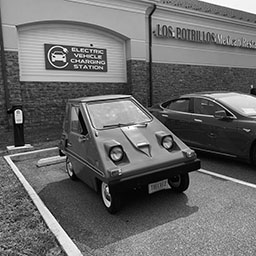
CitiCar at an EV charging station parked next to a Tesla

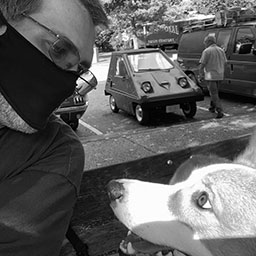
Teddy and I hopped into the CitiCar and left town for the first time. We took a little lunch break just outside of the city at Riverton Commons shopping mall. An EV charging station is located there with four Tesla destination chargers, and one J1772 charger. I pulled up and parked the CitiCar next to a Tesla.

I fumbled a little, connecting the EVSE to the converter, but I was able to get it. The Kill A Watt meter showed that I was getting voltage. I proceeded to hook up the chargers to the batteries and saw the usual 333 watts being drawn by the five 12 volt lead acid battery chargers.

Teddy and I grabbed a bite close to the station at Checkers. When I got back to the car, I saw that the chargers were no longer getting any power. One of the C-Car owners on the forums mentioned that some charging stations required at least a kilowatt of power to continue operating. Looking back at some video footage, I saw that the power strip was upside down. I believe I may have turned it off when I started spreading out the chargers so they weren’t all setting next to each other. I’ll have to make another attempt to verify.

While I was there, the owner of the Tesla came out and talked about a Comuta-Car he had owned for awhile. He ad a few questions and we chatted a bit before I left.

The whole trip was 6.0 miles. It was shorter than I had thought given that I always looked up directions to the Walmart in the same shopping center, but would have added an extra mile to the round trip. This trip was mostly going up a gradual hill in a 45 mile zone on the way up. I held the throttle down for most of the trek.

As the efficiency of the car improves, more locations become accessible. I now know that I can make it to the two plazas across from each other with the newer big-box stores out of town. I can visit a grocery, hardware, coffee, pet, and craft store as well as a bank ATM.

Access to more locations is fairly important at the moment because my other two vehicles are disabled. The SUV was fixed two weeks ago, but had broken down on Sunday with the same problem. The hybrid car simply needs a new battery and an inspection. I also need to reattach a plastic rock/air-drag guard that is dragging along the road under it.

Trip Log

WAYPOINTODOMETERDISTANCE
Home1,214.0
EV Charging Station1,217.03.0
Home1,220.03.0
Total6.0
RECHARGEENERGYCOSTDURATION
RatekWh9.85¢0.78 mph
Total1.53 kWh15.5¢07:39
Per Mile254 Wh2.6¢01:16

In other news

I haven’t received the Zero to J1772 adapter needed for the lithium battery charger that I purchased in July. I hadn’t heard a reply from three weeks ago when I inquired about the status of the order. From other C-Car owners I’ve talked to, this person is very responsive, but another C-Car owner was going through the same issue as I am. I decided to contact Tucson EV via PayPal communications.

Tucson EV got back to me the next day and stated that they thought it was already shipped, and that the adapter will be shipped tomorrow morning with a tracking number.
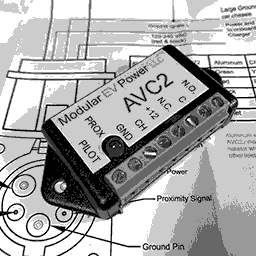
J1772 AVC2 Module by Modular EV Power LLC

I suspect the mixup was due a shortage of the J1772 active vehicle control modules (AVC) available at the time . These are small PCB boards (AVC1) enclosed in a plastic box (AVC2) that do all of the communications for you if you want to wire up your own custom made adapter. Everywhere I looked, these things were out of stock. I found EV West had them and ordered one at the end of July. They quickly notified me that it was out of stock. It was later shipped on September 1st.
CitiCar at EV charging station

Boston Cream

I’ve been getting out more and going off the diet. I’ve gained back 15% of the weight I’ve lost so far, visiting restaurants that I hadn’t been to in a long time, and raiding the fridge. It’s a guilty pleasure, and I need to find some motivation to get back on the diet. I also need a few more destinations other than fast food restaurants.

I took Teddy back down to Eastham park, and he got to play with two dogs. It’s been months since he’s chased another dog, and his tongue was hung out most of the time. Still trying to test the limits of the car, I decided to take a detour to Dunkin’ Donuts and pickup one of my favorite snacks – Boston cream doughnuts. The woman at the drive-through offered Teddy a “Pup Cup”. It didn’t last long.

New GPS Record

With a total trip of 9.5 miles, the little trek tied with the current record during the Custard Package Dropoff… with the old speedometer. Once I can break the record, I’ll no longer have that old vs new speedometer accuracy to complain about. I know without a doubt that today’s trip was the furthest the car has gone, but I want an accurate reading that can beat the inaccurate one. I’ll keep trying to push the car further.

The batteries still had 48.1 volts when we arrived home. The battery meter indicated that they had a 52% charge. I believe with 12 volt batteries, I should generally avoid going down below a 50% charge.

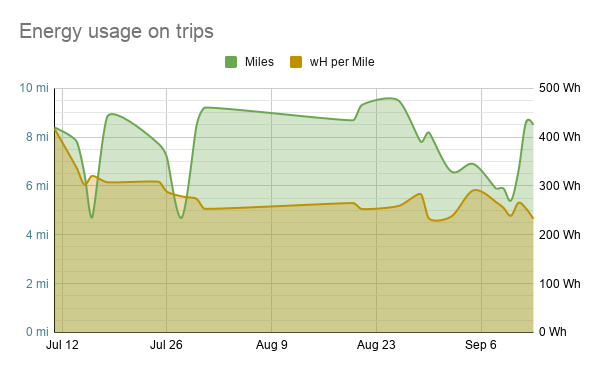
Energy usage over time

Since I had 23 trips last night, I updated the chart to be less noisy with 46 columns and growing. The new format makes time relative, so you can see a long line from the end of July to the middle of August when the motor was out of the CitiCar. Today’s trip is not on the image here.

Comparison of energy usage on trips relative to the total miles on each trip starting with a full charge.

I had started recording the data to determine if longer trips would affect the amount of energy per mile, and to see what effect my changes have.

Improving Range

It appears that the energy usage was fairly high at first, and then settled down. I attributed the improvement to changing my driving style in the CitiCar, and adjusting the brakes. It seemed to level off for some time, averaging around 275 wH/mile until recently.

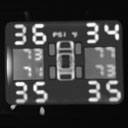
TPMS display in CitiCar

In recent trips, I am now seeing peaks matching up with each other in both total miles and wH/mile. I originally believed this might be due to the accuracy of the speedometer installed on September 5. There are matching peaks and valleys just before that, which may actually be related to when I installed the TPMS system and inflated the tires from 20 psi to 35 psi. The ride is a little harder at times, but I now believe that the tire pressure has made the most difference.

Energy on Long Trips

The total miles traveled now looks as if it may have an impact on the watt hours used per mile now. This is probably due to the energy consumed during different phases of a lead-acid batteries charging cycle the further the battery is discharged. I’m uncertain, but I believe more energy is used during the bulk phase. The further the battery is below an 80% charge, the more energy will be consumed to return it to a full charge.

PhaseSoCVoltageCurrent
Bulk< 80%IncreaseStable
Absorption< 100%StableDecrease
Float100%StableStable
Over simplification of lead-acid charging cycle

Warning Signs

On a side note, I noticed the brakes had a bit of a high pitch twice during today’s drive. Hopefully it’s nothing, but I’m noting it here in case it continues and it’s something to reflect on. I hadn’t noticed any other change in the brakes handling on hills or level roads. The weather was a clear sunny day.

Charging Results

The numbers are in. I caught the chargers just as the last one turned green.

Charging Time10 hours 28 minutes
Charging Speed0.91 miles per hour
Mile Time1 hour 6 minutes
Kilowatt hours2.30 kWh
Mile watts242 wH
Mile Cost2.5¢
Trip cost23.3¢
Charging statistics

Off by a mile

Before leaving the house today, I took the garage opener out of my car and put it into the CitiCar since that’s the only vehicle I park in the garage now, and it saves brakes and battery by avoiding a trip of walking into the house to close the door once I exit the garage.

I was ready to go, but nothing happened when pressing the accelerator. The contactor was engaged. I tried engaging/disengaging the parking break. The shift switch was in reverse. I looked at the wires that I fixed yesterday and everything was connected. I then realized that I hadn’t attached the throttle rod back onto the cam when I was installing the pot box throttle. Reattaching the rod, I was ready to go.

I was feeling even more emboldened today after making it to the dog park yesterday in the CitiCar. I even decided to take the steeper hill out of the subdivision, but soon realized it wasn’t as steep as I had thought, and it was shorter. I’ll be taking that “short cut” out of the subdivision more often now. I decided to put the car to the limit and drive the loop to Mc Donald’s and back.

Public Charging

We took a stop at Gertrude park along the way, parking close to the entrance this time to reduce the power consumption. I’m often parking closer to entrances and walking further to consume less energy.

I saw someone had plugged in their laptop the other day at one of the pavilions. Just before we left, I decided to give it a go and charge up. We were already at 80% charge, so the charge would have been fairly slow in the absorption/equalization stage.

Teddy and I sat by Happy Creek for a little while. He would wade around, drink some water, and just lay down enjoying the light breeze and watching people. I walked over and read the Kill A Watt meter. We only consumed 0.2¢ – about 1/15th of a mile added.

Mc Donald’s

We took off and zipped along, coasting when we could, avoiding the use of brakes, and using gravity and the lack of traffic to our advantage.

A CitiCar parked in the shade at Mc Donald’s on a warm sunny day

The drive-through at Mc Donald’s was so long that there was barely enough space for the CitiCar to queue at the end without blocking traffic. After picking up our food, we were able to make a sharp enough turn into the parking lot without having to loop around the building like most people and avoided waiting for an opening going through the drive-through line.

The ride home was the same as usual. No one was behind us for the most part, so we were able to coast often. We took the longer hill back home since it doesn’t have a stop sign at the bottom of the hill, and I have a goal of coasting home without pressing the throttle once I start going down. I haven’t made it yet, but I’ve come very close.

Odometer Readings

At the end, I looked at the odometer and saw that the trip was only 8.5 miles. A previous trip this way registered as 9.5 miles on the old (inaccurate) speedometer, and that didn’t include the stop at Gertrude and the additional length of a full loop rather than back-tracking via the shortest path. Mapping out the trips on Google maps, the GPS speedometer is under-reporting by 0.3 miles while the original speedometer was over-reporting by 0.9 miles.

TripOdometerTypeGoogle
Custard Package Drop-Off9.5 milesEddy Current8.6 miles
Gertrude McDonalds8.5 milesGPS8.8 miles

New Record

After the batteries reached a full charge, the energy consumption was the lowest recorded at only 233 watt hours per mile.

Final Destination

A few things are moving forward with the car. I’ve been taking little trips to parks around town fairly often.

Traffic Light Sensor

On my way to Chimney Field park, I was stranded at the light. The light cycled through its traffic pattern eleven times before it turned green for me during fairly busy traffic. I’m under the impression that the CitiCars aluminum frame isn’t able to trip traffic light induction sensors in the pavement. Someone mentioned in the C-Car forums that motorcyclists with this problem will get strong earth magnets to attach to the bottom of the frame.

Pot Box

I took a look at what I had to work with to find an appropriate spot to place the pot box. I prefer to keep the existing throttle switch so that I can swap between and original 3 speed and new gradual controlled driving styles.

Looking around, I found it difficult to find a spot to bolt the pot box. The floor is made of plastic, and even if I removed the original speed switch, I’m uncertain where I could bolt the pot box. I have an idea of using a bicycle cable for brakes/gear shifting so that I can put the pot box anywhere, but the cable itself still needs a place to secure it.

Charge Controller

I unbolted the charge controller, disconnected all the wires, and removed it from the car. The thing is heavy, weighing in at 26.8 pounds. Inside is a giant winding of copper and a little circuit board with an interlock switch to prevent the motor from operating when charging.

Original On-Board charge controller

On the back, I saw the previous owners name, company, address and a note:

Please Fix Low Voltage about 36v Book says should be 57½v

It’s comforting to know it wasn’t just me having a hard time getting the charger to work properly.

I had a bit of trouble determining how to wire the car back up to operate without it. Once I figured out what wires connect where, I crimped some spade terminals that fit very loosely into two of the original female connectors.

The CitiCar cabin light shining bright

One unintentional side effect is that my cabin light now works. Apparently it wasn’t hooked up to the charge controller properly. The connector looks a bit… melted or deteriorated.

Eastham Park

My primary usage of the car it to take Teddy for walks at various parks and events around town. My ultimate goal was to make it to Eastham Park because it has a Dog Park. The Royal Shenandoah Greenway runs through the park along the South Fork Shenandoah River. Not only is it far compared to my limited range, but there is a long and large hill to go back up a half mile on the way home.

Either due to my weight loss, driving style, 24/7 battery floating charge, “breaking in” the batteries, or a combination there of, the cars range appears to be improving. I decided that since I had free time this weekend, I’d give it a go and push the car to its limit.

Eastham Park trail under railroad tracks

It’s been a misty day with light rain at times. My shoes got fairly wet. There weren’t many people out, so Teddy had the whole dog park to himself. We also walked up to the end of the path at the high school before heading back. I let Teddy walk around in the South Fork Shenandoah river as well. On the way back, I could see people walking around and peering inside the CitiCar.

Loss of Power

The last part of the trip home today was an adventure in itself. As I made a hard left at a traffic light, the two loose spade terminals disconnected. The main contactor switch disengaged, and I lost power to the motor and lights – including the hazard lights. Fortunately I was in the slow lane, rarely used, highly visible, and pulled as close to the rail as I could before the car stopped.

I leaned over, connected the spade terminals, and was back on my way. I rewired a more secure connection after I arrived home. Eventually I need to rewire the whole car.

Although I’m going to upgrade the car to have a DC-2-DC system on board for my 12 volt power supply, I’m also considering using the small 12v battery I have now as a fail-safe backup for the hazard lights, signals lights, and flash relay. I feel that out of everything else on the car, I absolutely need the lights to signal that I’m having a problem if power is lost.

Longest Trip

I made it home without any other issues. This felt like one of the longest trips I’ve been on. The GPS speedometer is accurate compared to my prior one, so the trips appear shorter compared to prior trips. My old speedometer often registered 4 miles faster than my actual speed.

My trips to the town square are 0.8 miles less with the new speedometer (8.7 miles is now 6.9 miles). In all, my trip via GPS was only 8.6 miles, but I suspect the original speedometer would have registered just under 10 miles for the maximum distance on one charge. I arrived home with 48.3 volts at 54% charge.

Future Driving Goals

  • Cruising Speed (self powered)
    • 35 mph
    • 40 mph
    • 45 mph
  • Destinations
    • Checkers + Public Charger
    • Pet store
    • Rockland Park
    • Winchester
    • Dicky Ridge Visitors Center
  • Events
    • Parade
    • Car Show

Life happens

Things are a bit exhausting as of late with life. After hitting a loss of 100 pounds, I’ve put 10 pounds back on. One of my neighbors was able to fix one of my cars, so now I’m able to go further than five miles from home now. Work is work, but work gets done.

I couldn’t find my glasses the other day, so I dug out a spare set and drove to the park, only to find my glasses that I had left under a tree during my last visit. So… stress and exhaustion somehow play a mix into life.

So on with the car news.

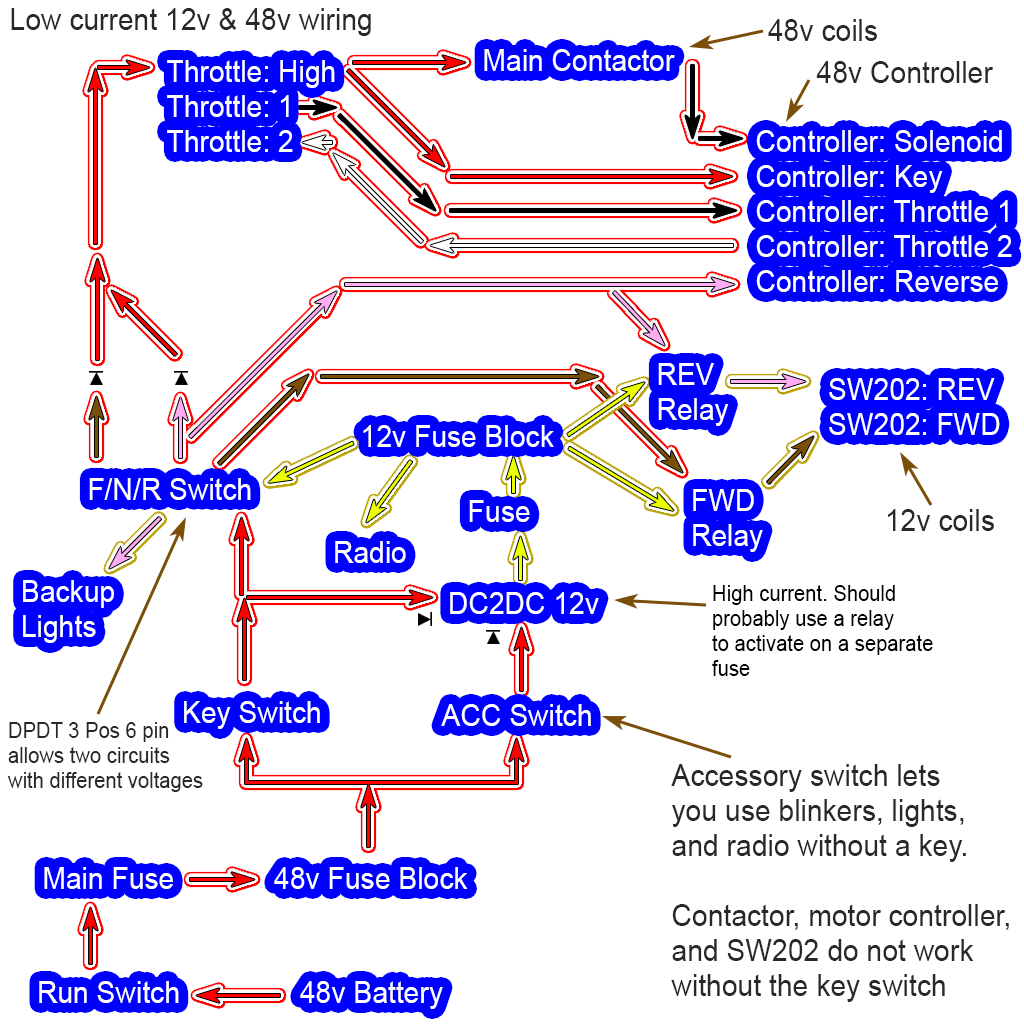
I was able to wire up the motor and spin it using the controller. In addition, I was able to wire up the SW202 switches for both forward and reverse. Some diodes arrived so that I can wire up the throttle switch for both positions without activating both switches at once, but I haven’t put them in-line yet.

I’ve been having a pretty bad time crimping with heat shrink terminals. I suspect its the ratcheting crimping tool that I am using. It said it was for heat shrink, but I’m having my doubts. I’m looking for a better tool to do the job as well as a ton more terminals.

I’ve been on a few trips recently. The latest trip was 239 wH/mile and was recharging the car at 0.92 miles per hour. I found that I could shave off a half mile when traveling to Gertrude Miller Park if I just park at Lions Community Park instead. The two parks are side-by-side, and I usually walk between the two on my visits. While driving, it doesn’t seem all that far, but a half mile shaved off the trip lets me finish recharging a half hour earlier.

I’ve got everything. Almost everything. I’m still waiting on the battery monitor.

Other than that, it’s been a lot of planning, trying to wrap my head around the wiring. I’ve got two different voltages that I’m hooking up in the system. I’ve learned a bit about relays and diodes, and worked out how to let certain things still operate such as blinker lights and the radio without the key.

Besides relays, part of the trick is to use switches that can support two separate circuits. I keep ordering the wrong switch for the gear shift. I first got an ON/ON switch and realized it didn’t have an off position for “neutral”. After that, I got an ON-off-ON switch, but didn’t realize it was a momentary switch. Hopefully, the third time will be what I need.

Here is the initial setup I’m thinking about along with notes of what is going on in this mess.

Catching Up

Quite a lot has been happening with the CitiCar and life in general. Let’s catch up.

First – all of the major components have arrived to modernize the cars motor. This is what I have:

4 Chevy Volt Battery Modules
48 volts, 50 AH each
Lithium battery chargerDC-2-DC
48v to 12v
5 amp and 20 amp
Fuse blocks
12v and 48v systems
GPS SpeedometerMotor
Alltrax Motor ControllerFuseMain Contractor Switch
Forward & Reverse SwitchBattery cut-off switchBMS for each battery module

In addition to that, I’ve been purchasing tools, wires, terminals, and more. I’m waiting for a part that would let me connect a public charging station to the cars onboard charger.

This weekend I’ve installed a GPS speedometer. The new motor does not have a shaft for the original speedometer cable, and it doesn’t have any way to sense how fast the motor is spinning. I’ve seen others use a GPS speedometer with the upgrade. The standard size requires a 3 and 3/8 inch hole. The stock speedometer is much smaller. With the new technology comes a feature to swap between total miles driven, and a trip odometer. I still need to drill a hole and wire up the button – if I can find it.

The body has lots of small cracks. They aren’t all that noticeable. I’m uncertain if they were there when I purchased the car, or if they are growing over time. A plastifix kit has arrived to help patch it up.

Two magazines have arrived with articles in them about the CitiCar in the 70’s.

Art Walk

Lounging about at happy creek

Teddy and I zipped on down in the CitiCar over to the Gertrude Miller community park. It was a nice day out and we spent quite a bit of time walking around the park, laying down next to Happy Creek and taking in the sound of the water, the wind in the trees, and birds chirping about.

“Get your art on” written on main street

Next we headed over to the town square. There was an art walk going on where people had setup crafts such as ceramics, antiques, and painting. Two of the tents looked like the artists did spray painting fairly quick with various techniques to make a complex painting in front of your eyes as entertainment for crowds.

Custard on a warm summer day

To beat the heat, we walked along Happy Creek. I let Teddy swim in the river for a little bit. We continued up to B & L Custard. This time I tried the strawberry sauce over custard in a waffle bowl along with whip cream and a cherry on top. Teddy was happy with just a plain pup cup.

CitiCar Maintenance

Window lock on a CitiCar

Arriving home, I loosened up the window locks. I used a Philips head screw driver on the exterior screw along with a 3/8 ratchet on the nut on the other side of the window.

In other news

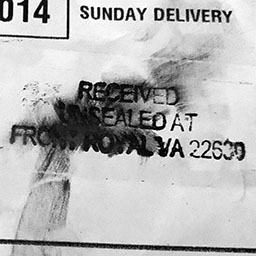
An unsealed envelop delivered to my door

Two packages arrived in the mail, but one was empty. I tried to request a replacement through the website, but I was being asked to send the original back, or I’d have to pay for it. A phone call to the vendor let me square things up. A replacement is being sent to me.

My Kalimba also arrived in one of them. I’ll be practicing with it while Teddy and I visit the parks.

Listen to me play a kalimba thumb piano

Each package was also supposed to have a different 3-way 12 volt adapter. The better one of the two arrived just fine.

Variety of hot chili peppers
Habanero peppers starting to ripen

My chili peppers are ripening. One of the Habanero peppers started turning orange. These are the hottest peppers that I’ve grown this year, and most of the plants had died off.

Trip Log

WaypointOdometerDistance
Home1,141.9
Gertrude Miller1,145.13.2
Town Square1,146.31.2
Home1,150.13.8
Total8.2
RechargeEnergyCostDuration
RatekWh9.85¢0.46 mph
Total1.92 kWh19.5¢17:53
Per Mile234 Wh2.4¢02:10

Two aught

I reached out for help regarding battery cables with other d-car owners and enthusiasts. Along with the advice that I got, one of the locals that I met in the CitiCars maiden voyage was willing to help out with supplies and tools leftover from his EV conversion project. Teddy and I hopped into our little car and zipped downtown to the town square.

We met up and with more understanding of the parts of an EV, I was able to have a more knowledgeable conversation this time and had a lot of questions to ask regarding his setup. learning a bit more about how the guy upgraded his pickup truck. I paid more attention to his setup and had my eye on his use of project boxes to keep things segregated, organized and protected. He had quite a bit of advice when I asked about wiring harnesses and thoughts regarding a themed car that could be easily reverted without damaging the body. His thoughts were to look into Plasti Dip and a brand for “Painless wiring” for quality cables/connections where cables are labeled and easy to install.

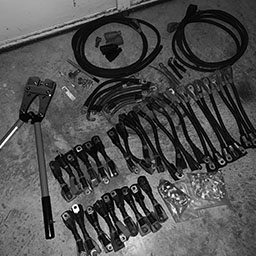
He had a large box of thick battery cables and two bags of battery lugs. The box was heavier than I had thought and caught me off guard for a moment. Along with the box of cables, I was able to borrow some wire cutters and a gigantic crimping tool. I opened the CitiCars back window and we stuck everything in with plenty of room to spare. Unfortunately, I forgot to grab the wire cutters…

Teddy grows some wings

Teddy and I enjoyed the park and took a stroll down main street. We went through Inklings, posed in front of a mural, and grabbed some ice cream from C & C Frozen Treats. Teddy had some mango while I ordered a quart of brownie ice cream.

Teddy, Lewie, and The Chez CitiCar

By time we left, it looked like a bunch of antique cars were arriving into the town square for a little car show. I had to bail before the rain came. I didn’t make it home in time, and the rain was coming down pretty hard. I kept the wiper on the lowest setting and didn’t run into any problems blowing a fuse this time.

Running 120 volt AC via J1772

The replacement Level 1 & 2 electric vehicle supply equipment (EVSE) arrived today. I verified that it was operational and setup the CitiCar to charge it’s batteries through a J1772 port. I don’t know if the folks at Sebring-Vanguard had ever imagined such a thing, but I am now able to recharge the car at a public charger. Here is the setup in order from the wall to my cars batteries in my little experiment:

  • 120 volt (5-15) outlet in wall
  • Level 1 & 2 EVSE (5-15 & 6-20)
  • EV Charger Power Converter (from J1772 to 120v & 240v)
  • Power strip
  • Five 12 volt battery chargers
  • Four deep cycle batteries for the motor and one small accessory battery
Displaying how I’m charging lead acid batteries with power supplied via J1772

I was loosing a tenth of an amp with the EVSE and power converter. To add more fun to the experiment, I decided to let the car charge to full capacity through the J1772 setup and see how much the total energy is affected.

Cable Inventory

Battery cables

Later in the night I started going through the battery cables I received to get an idea of what I had. The cables can be called either 00, double zero, 2/0 and pronounced as “two aught”.

I started taking inventory, measuring inches from the center hole of each lug.

LengthQuantityLengthQuantity
11
6710¾1
413¼1
213½1
7113¾4
1142
114¼4
114¾1
Cables with flat lugs at each end

Some cables also had a 90 degree lug at one end, but the shorter ones didn’t have a lug at all on the opposite end.

Missing LugTwo Lugs
5
4
312
12¾
13½
Cables where one end has a 90 degree lug

Two long cables were included that were 13 feet, eight inches, and another at fourteen feet, 11 inches. The longer cable didn’t have a lug on one of the ends.

There are quite a few good cables that I can use. The longer cables alone may be enough on their own. Many of the smaller pieces can be used for jumps between switches, fuses, controllers, and such.

Battery cable connected to two Chevy Volt battery modules

I found that I could barely use the 10¾” cable to connect two Chevy Volt battery modules next to each other. I have four cables that are 13¾, and four more at 14¼ that I could use with more slack between the batteries. It’s preferable to have a shorter length to reduce voltage drops. Although with the length of this circuit, the drop would already be fairly minimal.

Corroded lug
Wire brushed lug

I spent some time cleaning up one of the most corrosive lugs. I first tried to do it by hand with a wire brush with some progress. I then grabbed my angle grinder with a wire brush attachment and cleaned it up fast. I was finding that I was chasing some of the corrosion down under the heat shrink around the lug.

Things are coming along great. I have many cables that I can clean up and use once the motor arrives. I have the supplies necessary to make my own custom length of cables as well.

Tiny Radio

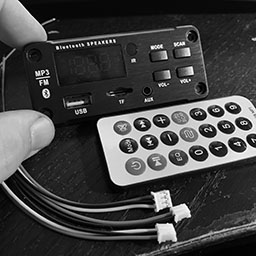
One of my tiny car radio modules came in the mail today. I actually ordered three different kinds because it was difficult to judge how big they were. This three dollar radio was originally just for a side project to stick on a repurposed 8-track tape. The idea was to give my 8-Track radio some modern features to play music from a blue tooth device as well as micro SD cards.

Bluetooth MP3/WMA decoder USB/Micro SD/Aux FM radio module

I was originally set on installing an 8-Track radio and an Android media entertainment center for navigation in the CitiCar. I’m having a difficult time determining where I should put them. I don’t have much space available on the dashboard to mount things, or the support to mount anything with some weight. I’m considering using one of the little radio modules instead.

I was able to wire the little radio up to work with both five and 12 volts, as advertised. The radio works, Bluetooth hooked up without a problem, and I was able to get MP3 files playing from a micro SD card. One thing of note is that I definitely need an amp. The little radio can put out a signal, but any speaker I try is so low, it is difficult to hear. The voltage supplied to the radio does not make a difference.

WAYPOINTODOMETERDISTANCE
Home1,134.1
Town Square1,138.03.9
Home1,141.93.9
Total7.8
RECHARGEENERGYCOSTDURATION
RatekWh9.85¢0.46 mph
Total2.21 kWh22.4¢17:00
Per Mile283 Wh2.9¢02:10

Under pressure

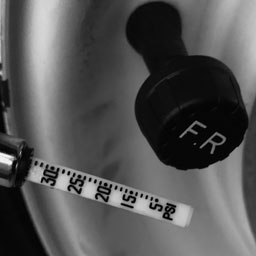
External TPMS sensor

The TPMS monitor arrived. The packaging looked like it was opened along the way going through customs.

It was fairly easy to install. Replace tire stem caps with little knobs. An alarm went off almost immediately as I put one on. I changed the units of measurement so the pressure and temperature were set to PSI and Fahrenheit.

TPMS host display

My tires were setting around 20 psi. The maximum pressure for the tires is rated at 51 psi.

I did some quick research and found most cars have a pressure around 32 psi, and that the door should have a sticker with the recommended tire pressure. I only saw the sticker with the VIN on it. I dug through the owners manual and found that Sebring-Vanguard recommended a tire pressure of 32 psi. Inflated the tires to 35 psi.

RECOMMENDED TIRE PRESSURE

The recommended tire pressure for standard and radial tires, front and rear is 32 psi. A lower tire pressure will give a softer ride, but a lower speed and ranger a higher tire pressure gives better speed and range.

CitiCar 1976½ Owners Manual, Sebring-Vanguard page 24

Power Transmission

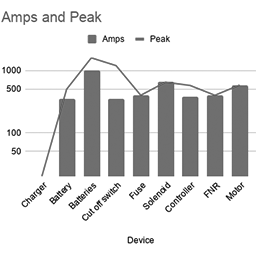
Along with receiving the majority of parts by the end of next week, I’ve been researching battery cables. The first thing was to identify the amps going through everything.

DeviceAmpsPeak
Charger2020
Battery Monitor350500
4 Battery Modules4 * 250
1000
4 * 400
1600
Battery Switch350
600@5 min
1200@30 sec
1200
Fuse400400
Contact Solenoid650650
Motor Controller380
420@5 min
500@2 min
575
Reversing Contactor400400
Motor52-584584
Max Amps Allowed350400
Amperage that devices can produce, handle, or draw in the circuit

The fuse does not allow any more than 400 amps supplying the motor. From here, I was able to get a general idea of how large the battery cables need to be.

In addition to amps, I also had to take voltage drop into consideration. To do this, you need to know the length of the full path in circuit – battery to motor, and back again. I took some string and laid it out in a large loop around the bench seat. It came out to roughly nine feet.

The parameters are 48 volts @ 400 amps running along nine feet of cable. I found a calculator and put in the following:

InputValueCalculated
MaterialCopper
Gauge2/0 AWG
00 AWG
Voltage48 VDC
1-way circuit length4.5 feet
Load400 amps
0.288 VDCVoltage Drop
47.712 VDCVoltage at Load
0.6%Voltage Drop
133100
circular mils
Wire cross section

It appears 2/0 AWG wire will handle the maximum load the fuse will allow with a minimal voltage drop.

In other resources, I’m finding that 00 gauge is often rated for a maximum current of 186 amps, and that you should never exceed 80% of the rating (148.8 amps). Even a 4/0 wire will only be rated for 380 amps max.

In this scenario, it feels like the wire will melt before the fuse breaks. Things that confuse me are that the information that I’m finding is often for bringing electric into a house. I often look at how golf carts are wired up, but they are often working with 2 AWG wire, which is much smaller than 2/0 AWG.

To support 400 amps, I think I would need 500 kcml / 500 mcm of copper wire rated for 90°C. It looks like it costs roughly $14/foot. The wire is thick – as in power lines on telephone poles. I wouldn’t have the ability to afford tools to cut, crimp, and bend the stuff. Besides speed, I think modern EV’s go with higher voltage systems to reduce the amps needed, thus reducing the size of the wire.

The motor controller supports current limiting, so I could force it to use no more than 148.8 amps if I desired.

Someone local that I met on the maiden voyage has a few tools and supplies to help out with that they had used on their own EV.

In other news

  • D & D Motor Systems is shipping my motor.
  • Popular Science, June 1975 has been shipped
  • The portable EVSE has been shipped
  • I need to do some research on plug breaking / dynamic braking
  • I may need to contact D & D Motor Systems or Alltrax to see if they have a field map for my specific motor / controller.

Popular Science Mechanics

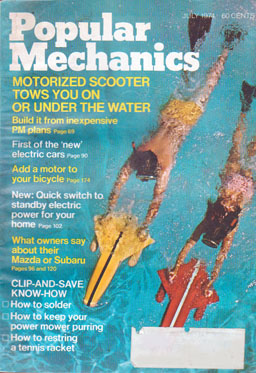
Popular Mechanics July 1974 cover

Today I received a Popular Mechanics magazine from July 1974 with a five page article for the CitiCar. I did a bit more research and found another magazine in the archives. I found a used copy of Popular Science for June 1975 (page 61-63) and made a purchase.

An adjustable angle antenna arrived for the car. I’ve already been successful installing another, so it’s not needed now.

Lots of critical components to replacing the power train are about to arrive by the end of next week.

  • Chevy Volt Battery Module Charger – Monday
  • Two Chevy Volt Batteries 48 volts, 50 amp hours – Monday
  • Two Bluetooth BMS – Monday (same package as batteries)
  • Replacement Portable EVSE – Saturday

Things to be shipped soon

  • ZERO J1772 adapter from Tucsan EV – pinged for a status update
  • New motor from D & D Motor Systems – any day ready to be shipped
  • Forward & Reverse switch – tracking label created…

After two months of researching and gathering parts, I’m getting a bit excited that I’ll be able to start testing things soon.

I think the main parts left for research are battery cables (make my own or purchase?), wiring harness, and a good set of tools for crimping.

Design a site like this with WordPress.com
Get started